MOROCCO
The Women’s Atlas
NEXT TRIP:
FROM NOVEMBER 2026 TO FEBRUARY 2027
(11 DAYS)
MAXIMUM 6 PEOPLE
HIGH ATLAS: ROSES, AÏT HMED, M’GOUN AND DADÈS VALLEYS
GUIDE IN FRENCH
OVERVIEW
Walking from village to village, as guests of the women of the Atlas
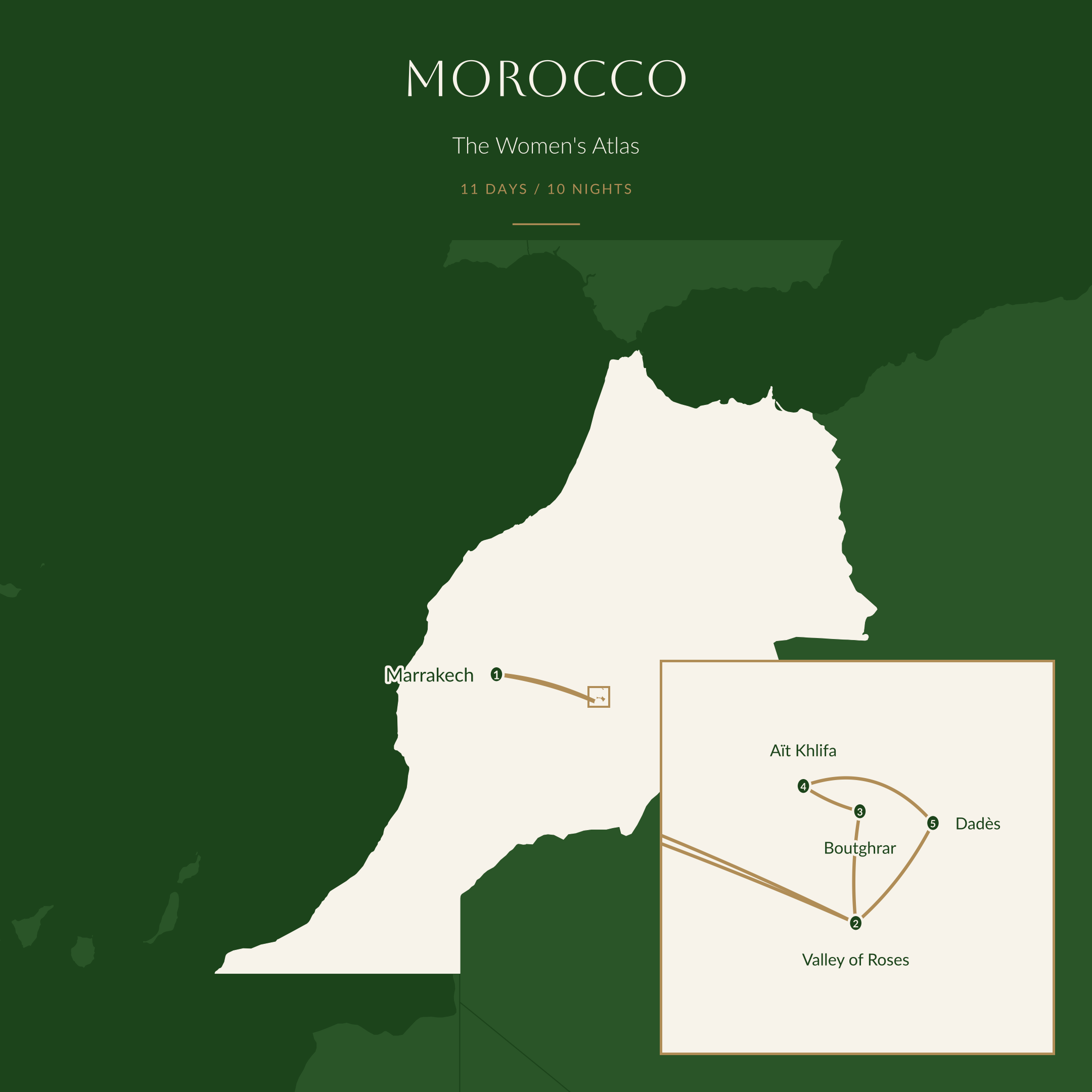
11 days / 10 nights · Four valleys of the High Atlas
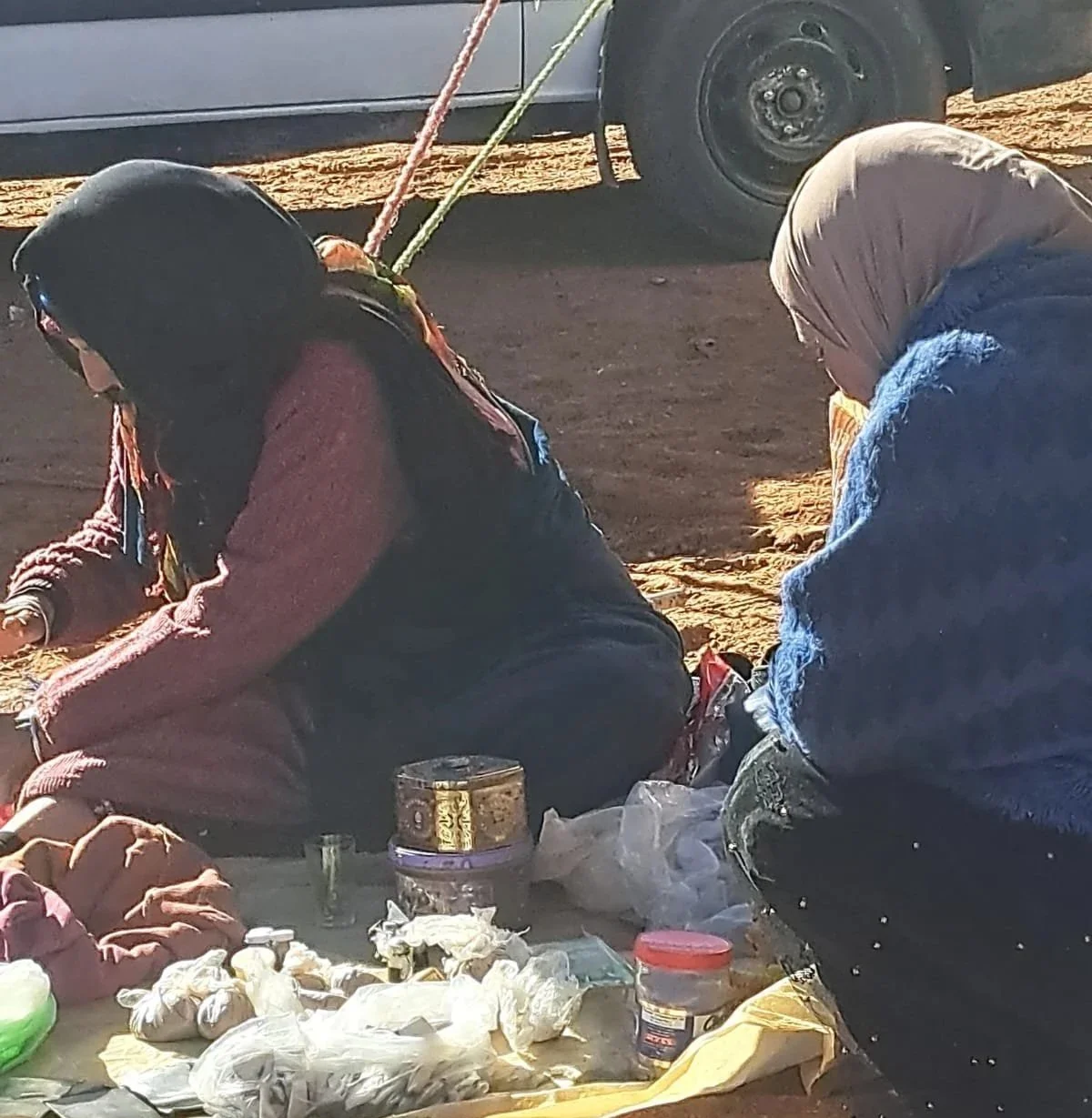
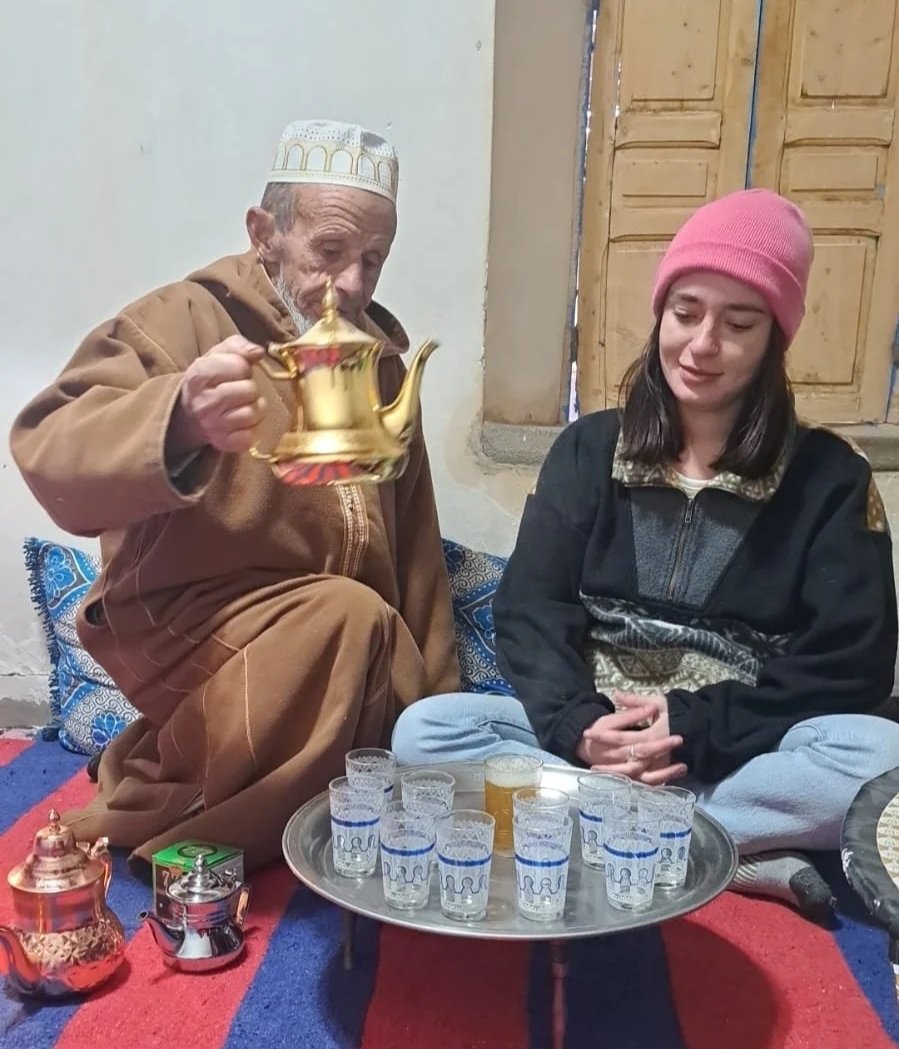
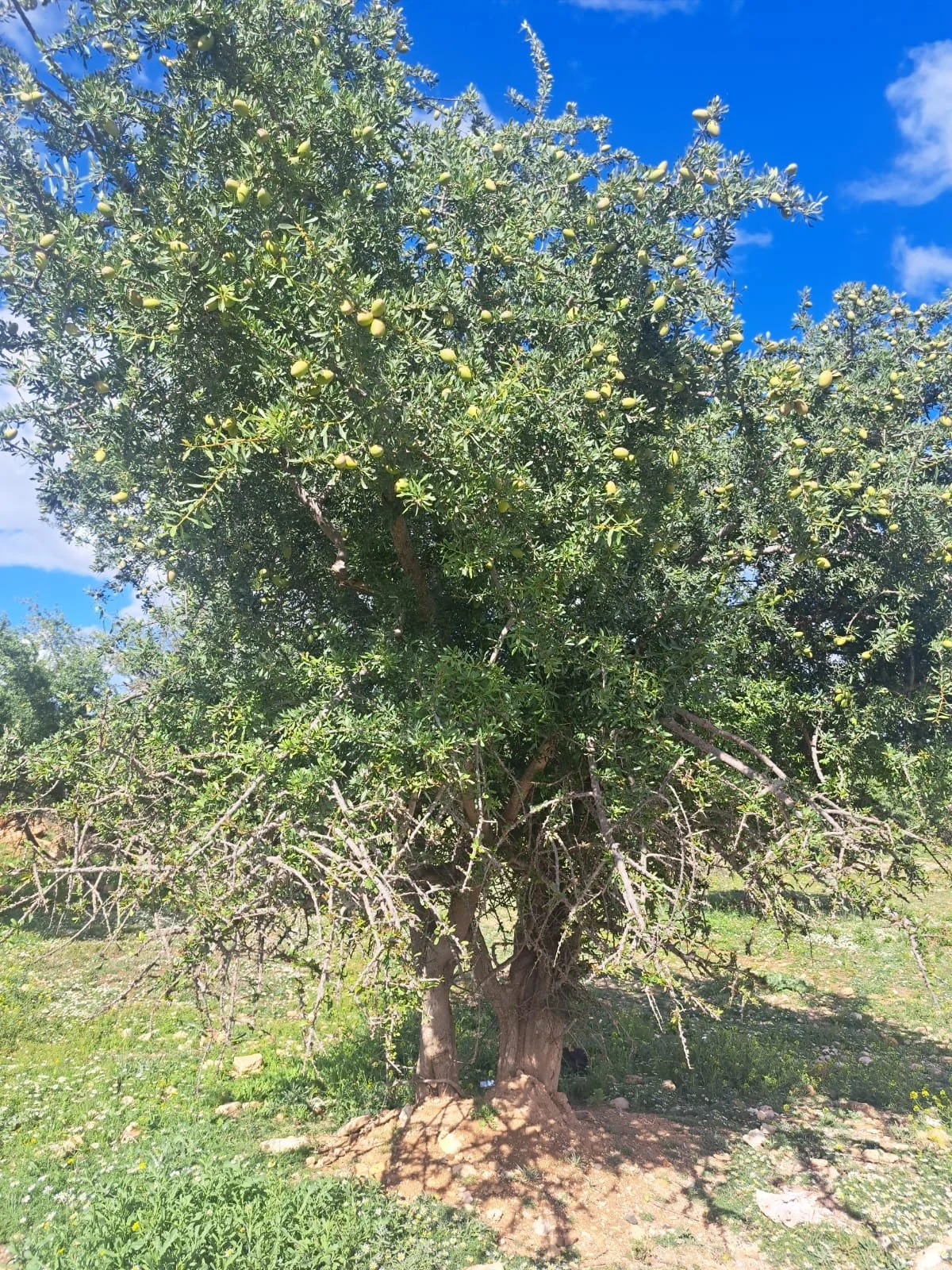
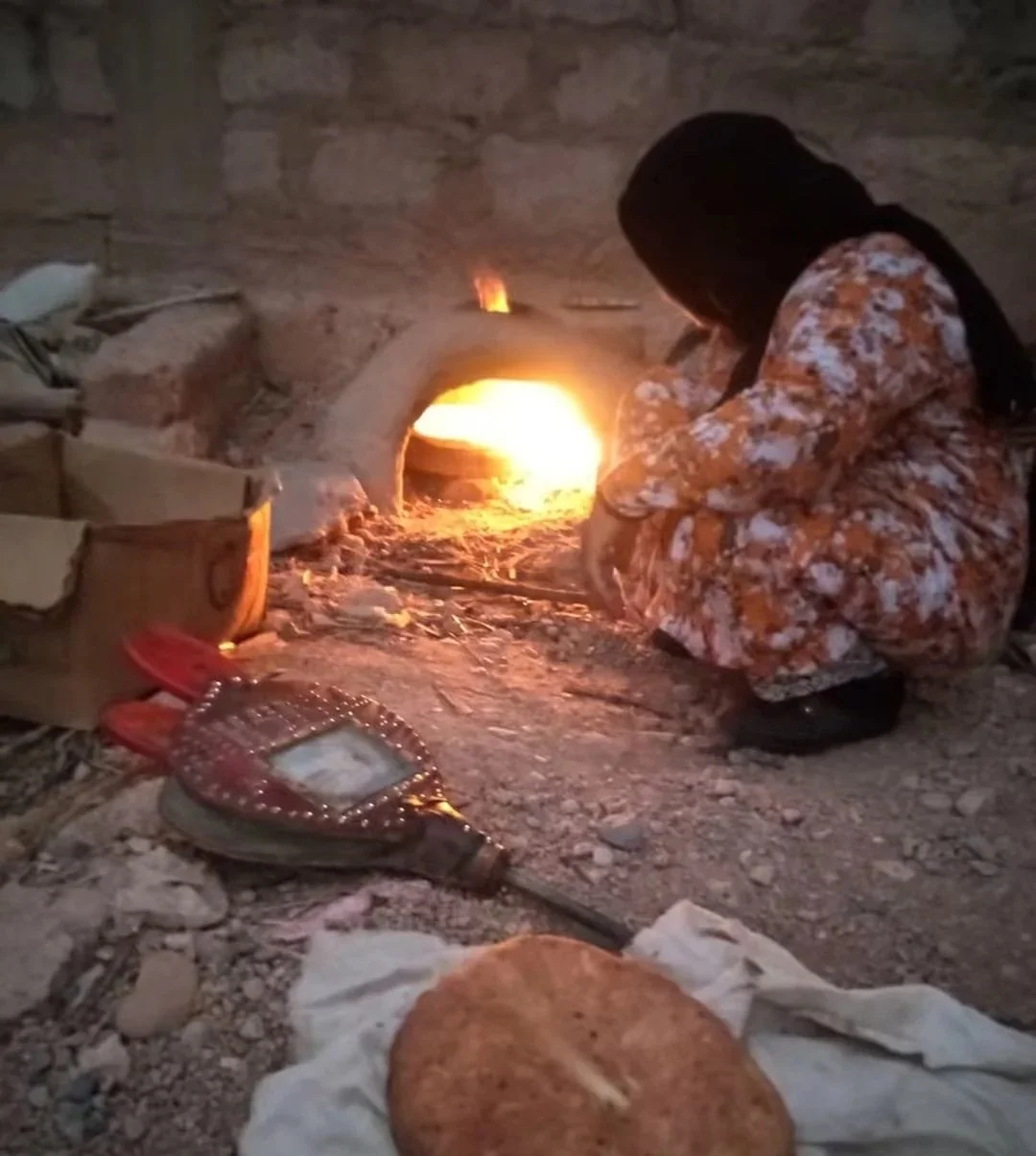
A slow journey through the High Atlas, as guests of the Berber communities and their women's cooperatives. Over ten days we cross four valleys — the Valley of Roses, Aït Hmed, the M'goun and the Dadès — walking from one village to the next and sharing in the daily life of the women who keep their traditions alive: cooking, weaving, henna, gathering herbs, and the breads of each region.
We walk gently, 3–4 hours a day, among earthen kasbahs, gardens, nomad shelters and mountain passes. We sleep in family homes, share meals, and learn by doing. The final night brings us to Marrakech, where the journey comes to a close. This isn't an itinerary of monuments, but an encounter: Morocco seen through the women who hold it together, far from mass tourism.
O O O O O
O O O O O
O O O O O

O O O O O
O O O O O
O O O O O
ITINERARY
-
Flight from Italy to Marrakech: a short flight of a few hours, arriving the same day. Overnight in a hotel in Marrakech (included); the next morning Mohammed picks us up directly at the hotel.
With flight included: departure from Italy on the first day of the trip.
Own flight: you must be in Marrakech by 6:00 PM (18:00) on Day 1.
-
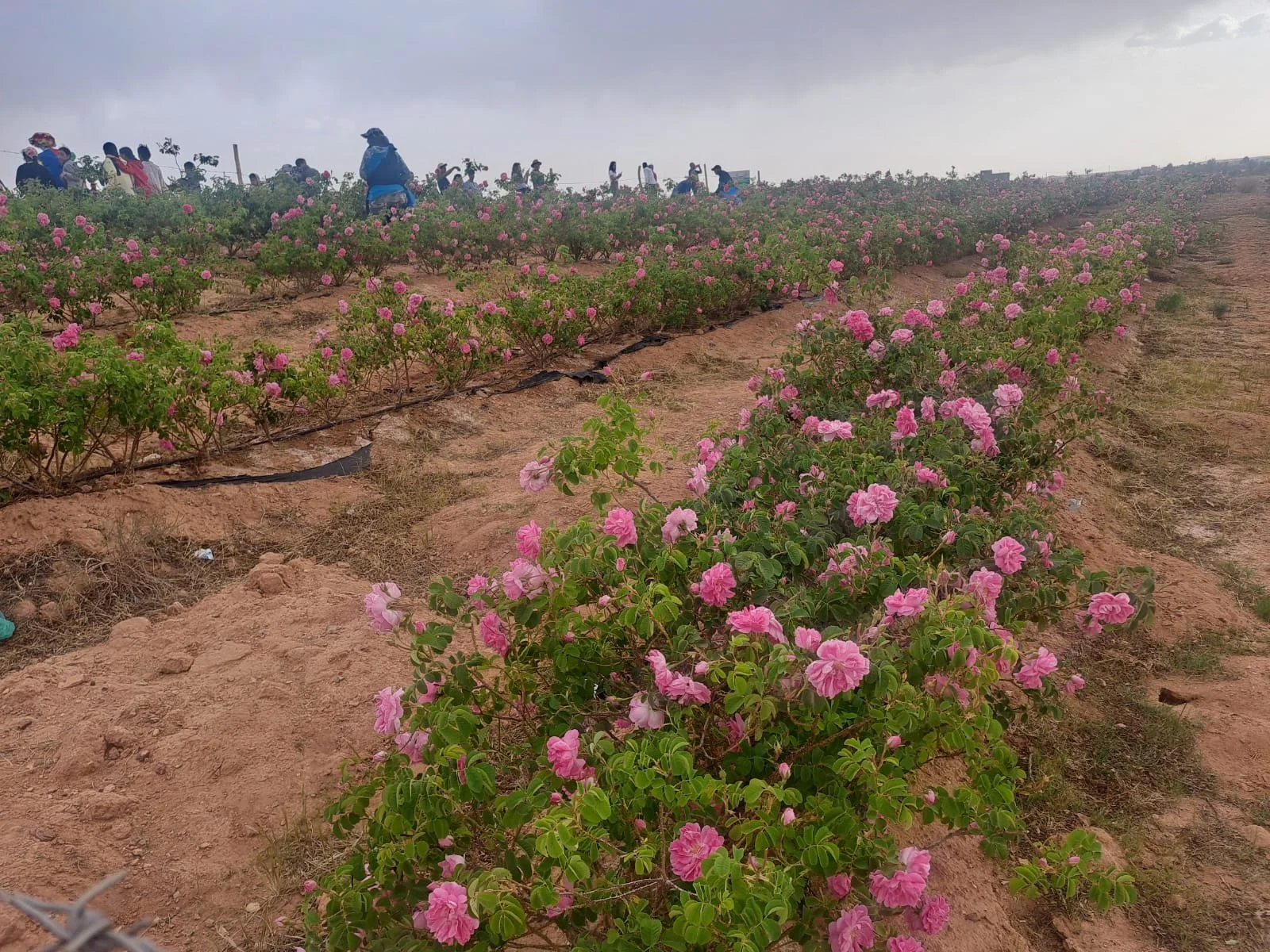
In the morning Mohammed picks us up at the hotel in Marrakech and we head to the Valley of Roses, near Kelaa M’gouna, for check-in at the “3 Terrasses” kasbah and a first taste of the valleys’ rhythm. (Night in a kasbah)
-
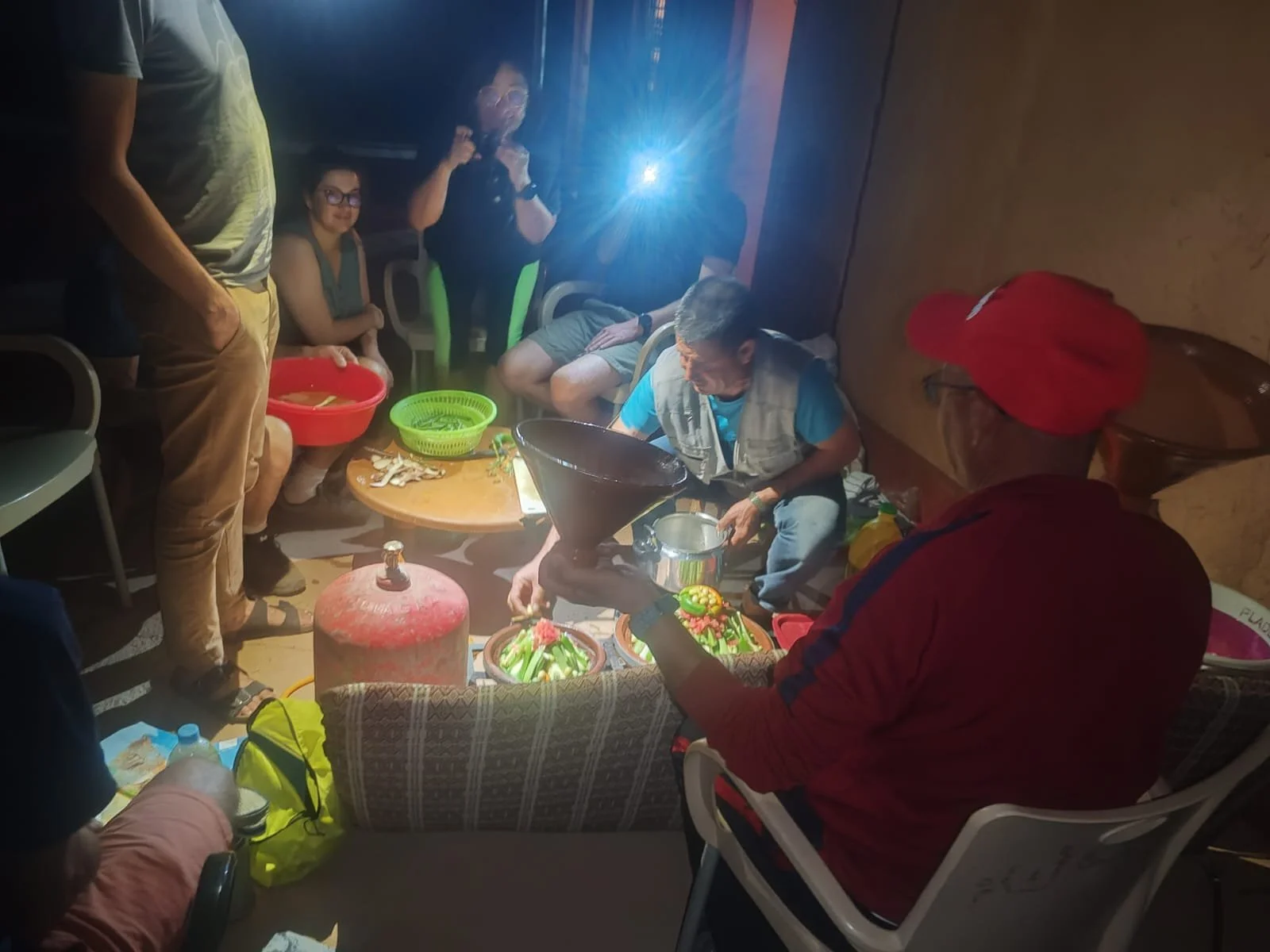
A loop walk from Ifr to Hdida (3–4 h) with the women of the Hdida association. In the afternoon, we help prepare dinner (tajine, soup, tea) and enjoy a henna tattoo. (Night in a family home)
-
Loop from Hdida to Boutghrar over the Tialouit pass (2,025 m), 3–4 hours of walking. The afternoon is given to village life: gardens, weaving and a shared dinner with the family. (Night in a family home)
-
Transfer to the Aït Hmed valley, as guests of a Berber family in Aït Khlifa. A 4-hour loop to the kasbah of Rbat, past nomad shelters and gardens. Lunch with the women of the association and dinner (alfalfa couscous). (Night in Aït Khlifa)
-
A loop towards the Agouti gorges and the village of L'Hot. Tea at the L'Hot kasbah, lunch in nature and herb-gathering with the women. In the evening, a demonstration of traditional Berber make-up (clove, saffron, kohl). (Night in Aït Khlifa)
-
A 4-hour walk to the village of Amskar, across the Ifard nomad plateau and the shelters of the Atlas. We visit the Tichki waterfalls, followed by an evening of local folklore. (Night in Aït Khlifa / guesthouse)
-
A 4-hour walk to change valleys: a mountain crossing from Tinfjane, past the Timatda nomads and the Issoumar pass, to the village of Tizguine. Lunch at the mouth of the Imi n'Ouaka gorges, under the fig trees. Dinner with the family and a lively evening. (Night in a guesthouse / M'goun)
-
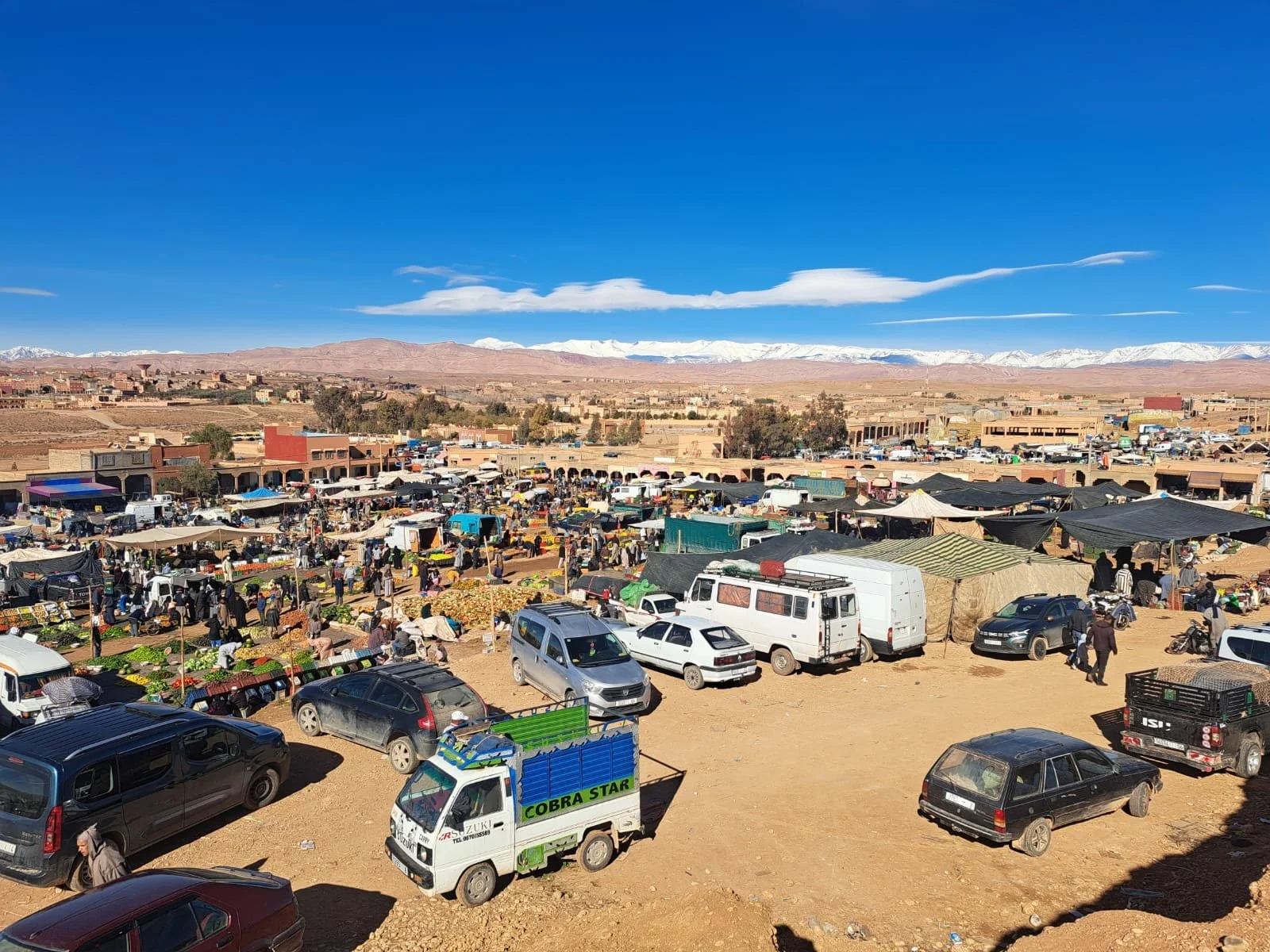
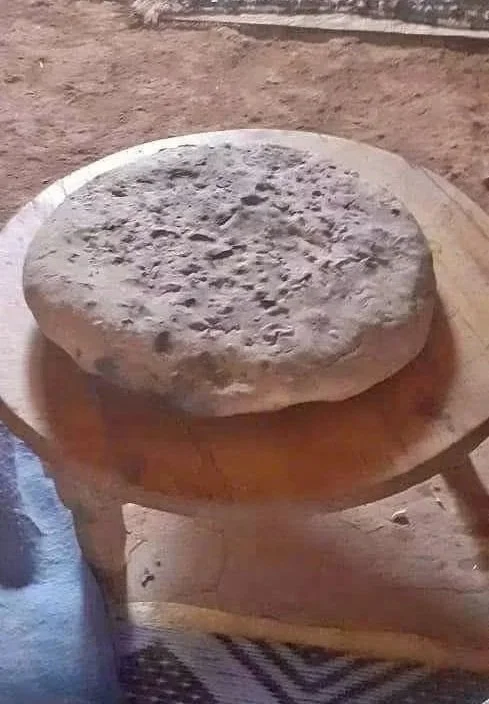
A walk in the Dadès Valley, a loop around Aït Arbi with its kasbahs and the "Monkey Fingers" rock formations. In the afternoon: a hammam in Kelaa M'gouna, the city of roses, and a visit to the rose-products cooperative. A demonstration of the three regional breads. (Night in Kelaa M'gouna / Dadès)
-
Transfer to Marrakech. Last night in a hotel and an evening in the red city. (Night in Marrakech)
-
Return flight home.
Depending on the flight timetable, you are free to organise your day as you wish.
Meals, transport and activities on the final day are not included in the price.
How much it costs?
1’390 CHF

1’190 CHF
Everything you need to know
-
This is a slow, immersive journey on foot, staying as guests in Berber family homes rather than hotels. Daily walks are gentle (3–4 hours), but you should be comfortable walking on uneven mountain paths and adapting to simple, authentic village accommodation.
A passport valid for at least 6 months beyond your return date (visa required depending on nationality).
Travel insurance with cancellation and assistance cover, valid for the whole trip, is compulsory and not included in the price.
Health: check with your doctor regarding any recommended vaccinations; bring any personal medication with you.
-
Broken-in hiking boots + comfortable shoes or sandals for the evenings
Layered clothing: warm during the day, cool in the evenings and at night in the mountains. Hat, sunglasses, sunscreen, a scarf or shawl
Water bottle, headlamp, power bank
Small daypack for the daily walks
A light sleeping bag
Cash in dirhams for personal expenses and small purchases.
-
Public displays of affection: acceptable if done discreetly; avoid them in villages
LGBTQ+: restrictive laws; exercise great discretion
Alcohol: only in licensed establishments, never in public
Clothing: modest; shoulders and knees should be covered
Taking photos of people: always ask for permission
Ramadan: do not eat, drink, or smoke in public during the day
-
3–4 hours of walking per day: no technical experience required, but a reasonable level of physical fitness is helpful
Respect for local communities: ask before taking photos of people
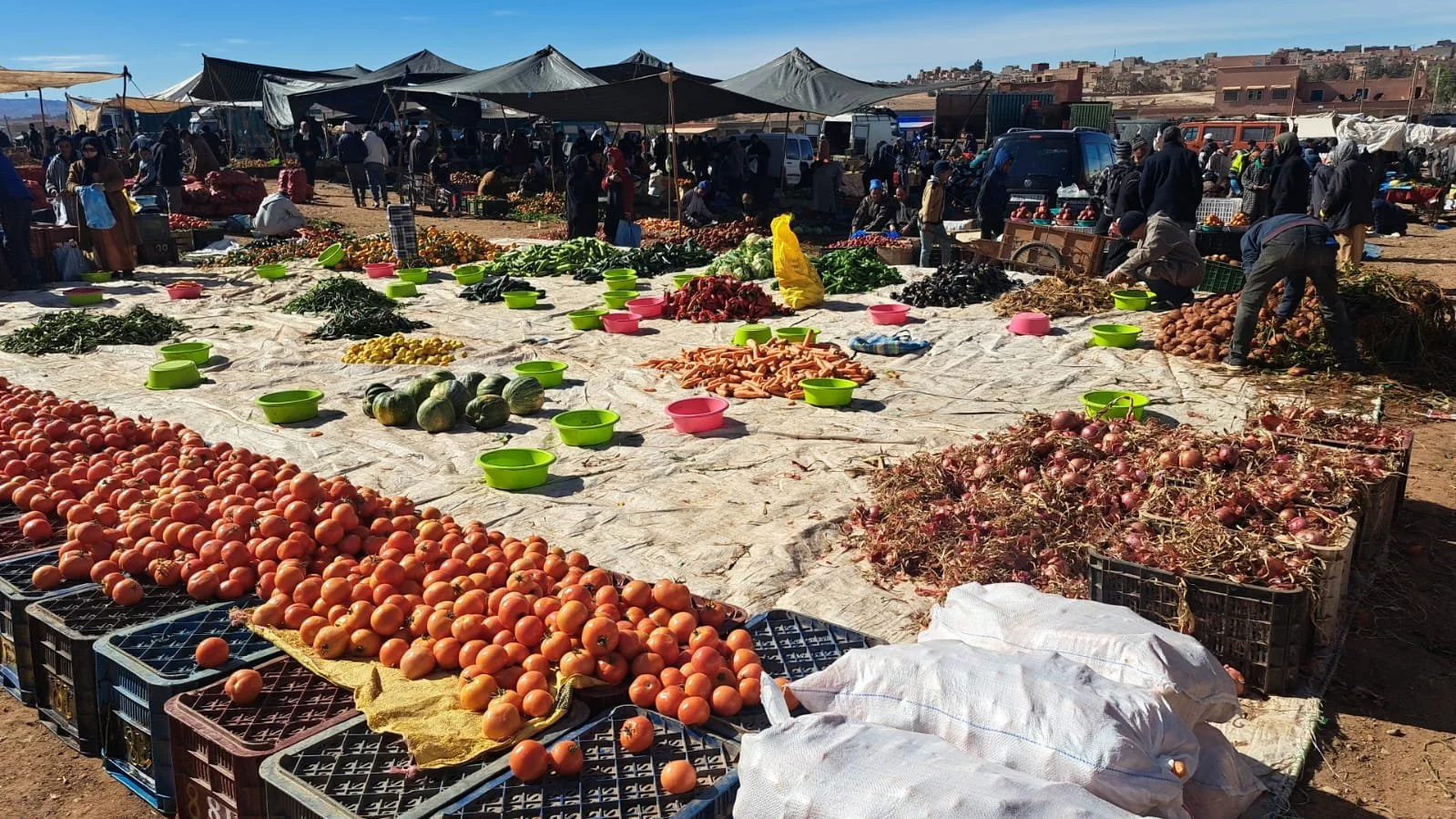
Cash (dirhams) for tips, drinks, and small purchases at markets
Guide in French
-
1 night in a hotel in Marrakech on Day 1 (also for those arriving on their own flight)
All transfers by minibus/taxi
Overnight stays in hotels, family homes and kasbahs
Full board during the trip
All the activities
Local guide in French
-
Additional drinks
Tips
Personal expenses
Travel insurance with cancellation and assistance cover (compulsory)
All activities, transportation, meals, and drinks on Day 11
-
Per person:
Without flight: 1’190 CHF
With flight: 1’390 CHF
Meet your guide:
Mohammed Oukam
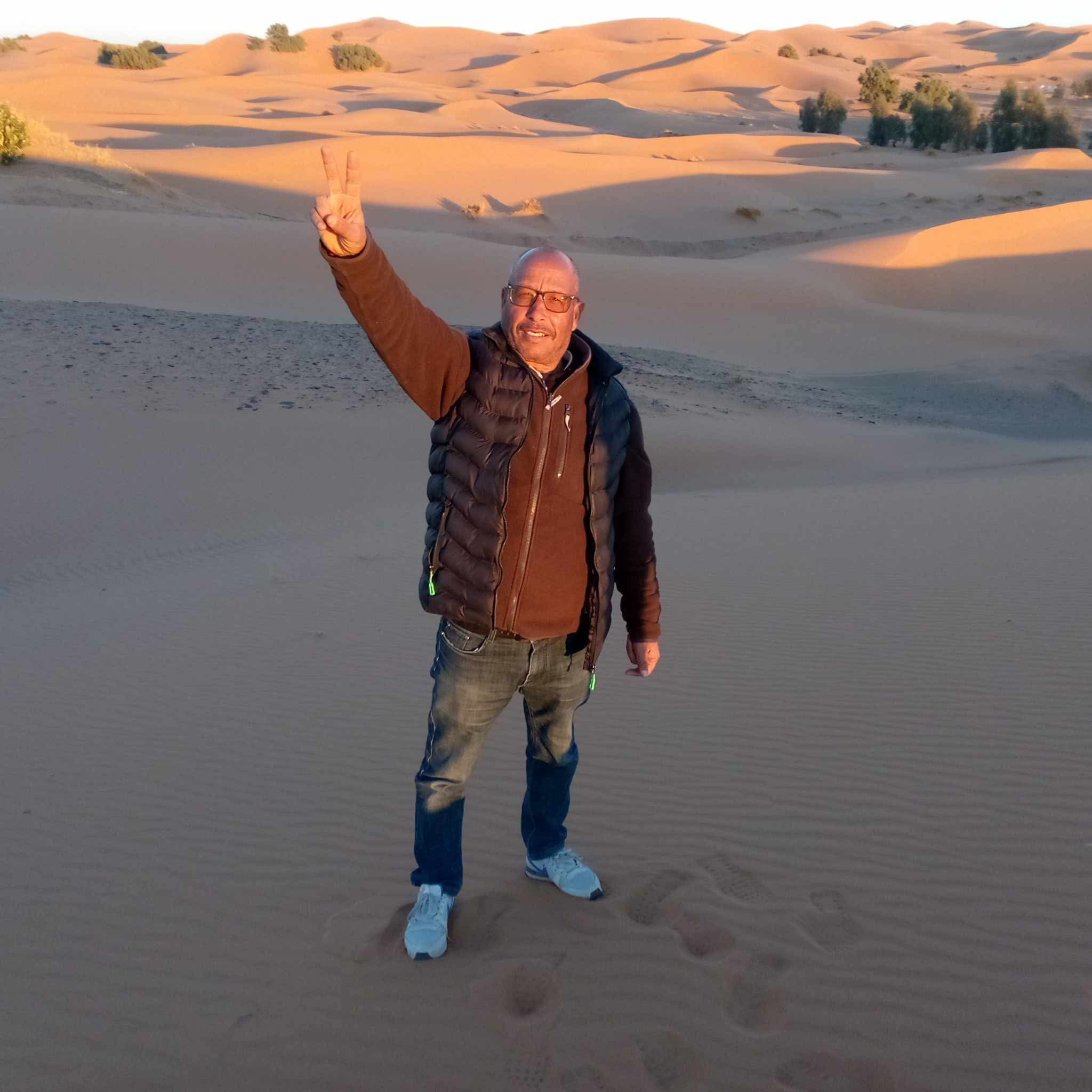
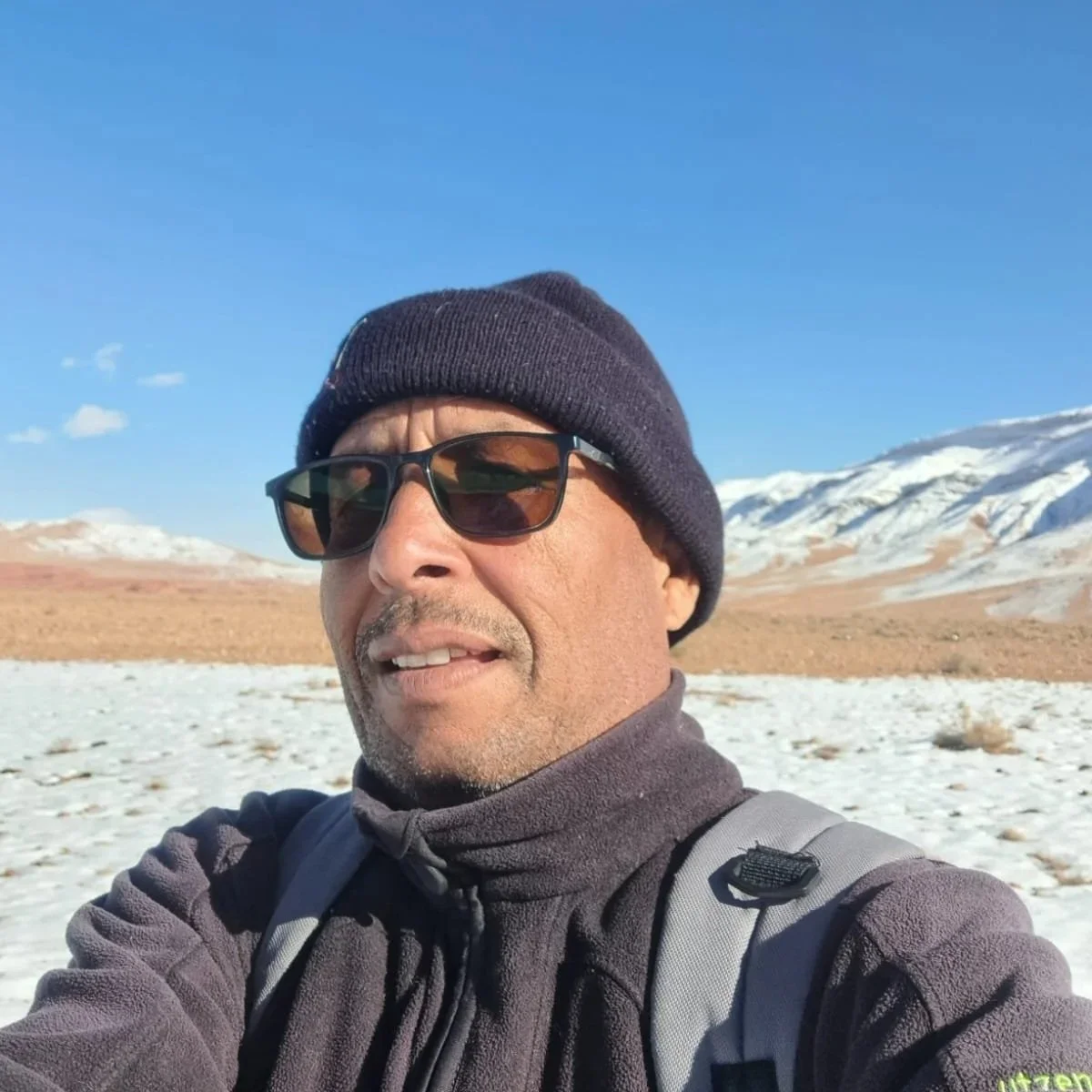
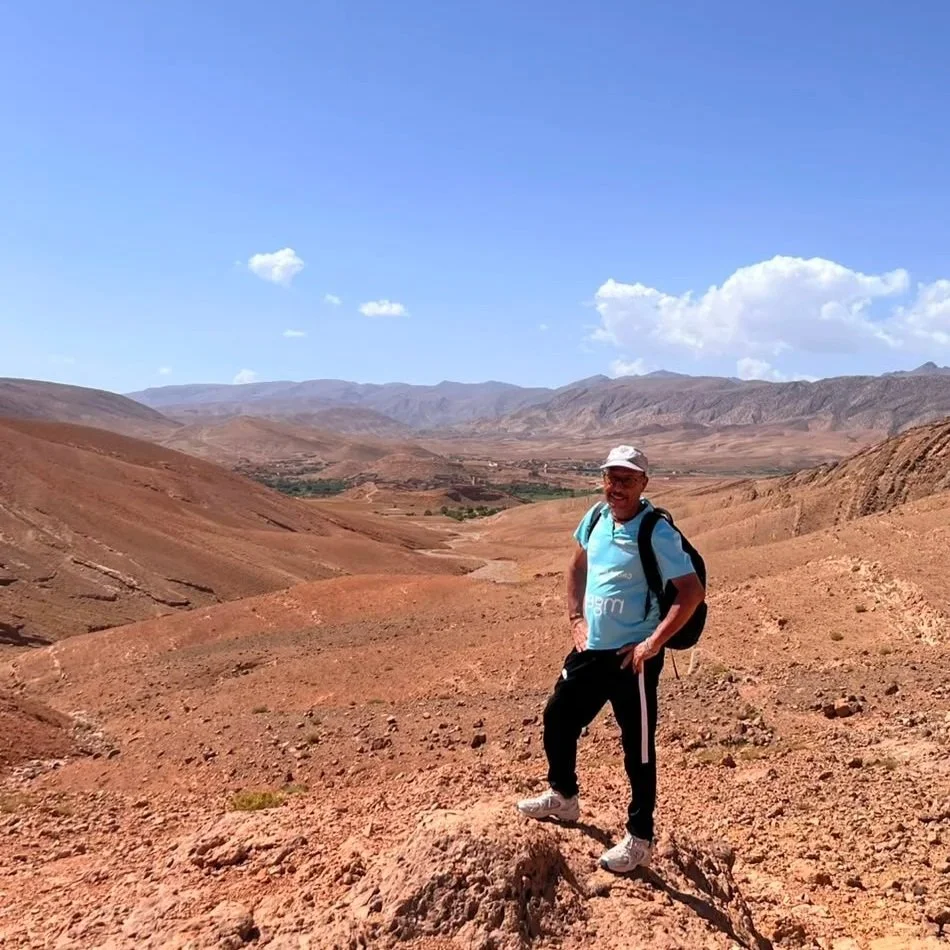
A Berber from the Valley of Roses, on the southern slopes of the central Atlas, Mohammed is a certified guide in natural environments: mountain, desert and coast.
With over 24 years of experience, he knows the Atlas and the Sahara like no one else, from Toubkal to the dunes of Erg Chebbi.
A passionate lover of nature and hiking, and having also lived for a few years in Switzerland, Mohammed speaks French, Arabic and the Berber dialects. Open, attentive and a good listener, he turns every journey into an authentic encounter with a warm and genuine Morocco.