
Oggi è una giornata grigia, con qualche raggio di sole che attraversa la foschia. Fa caldo, è umido. Entrati nella piantagione, oggi museo, ci consegnano un'audioguida: la mia in italiano, quella di Sally in tedesco.
Iniziamo la visita entrando in un enorme spazio verde che un tempo è stato una prigione senza via d'uscita per tantissime persone schiavizzate.
La sensazione è particolare, intensa. Non ci sono molti visitatori, e la maggior parte sono bianchi; ci sono anche alcune persone afroamericane.
Incrociarsi su questo terreno, dove non molti anni fa persone bianche ridussero in schiavitù persone nere, lascia un forte senso di disagio, anche se con quelle atrocità non hai un legame diretto. Inizia così la mia visita: incrociando una visitatrice afroamericana, salutandola e abbassando lo sguardo.
Una casa costruita da altri
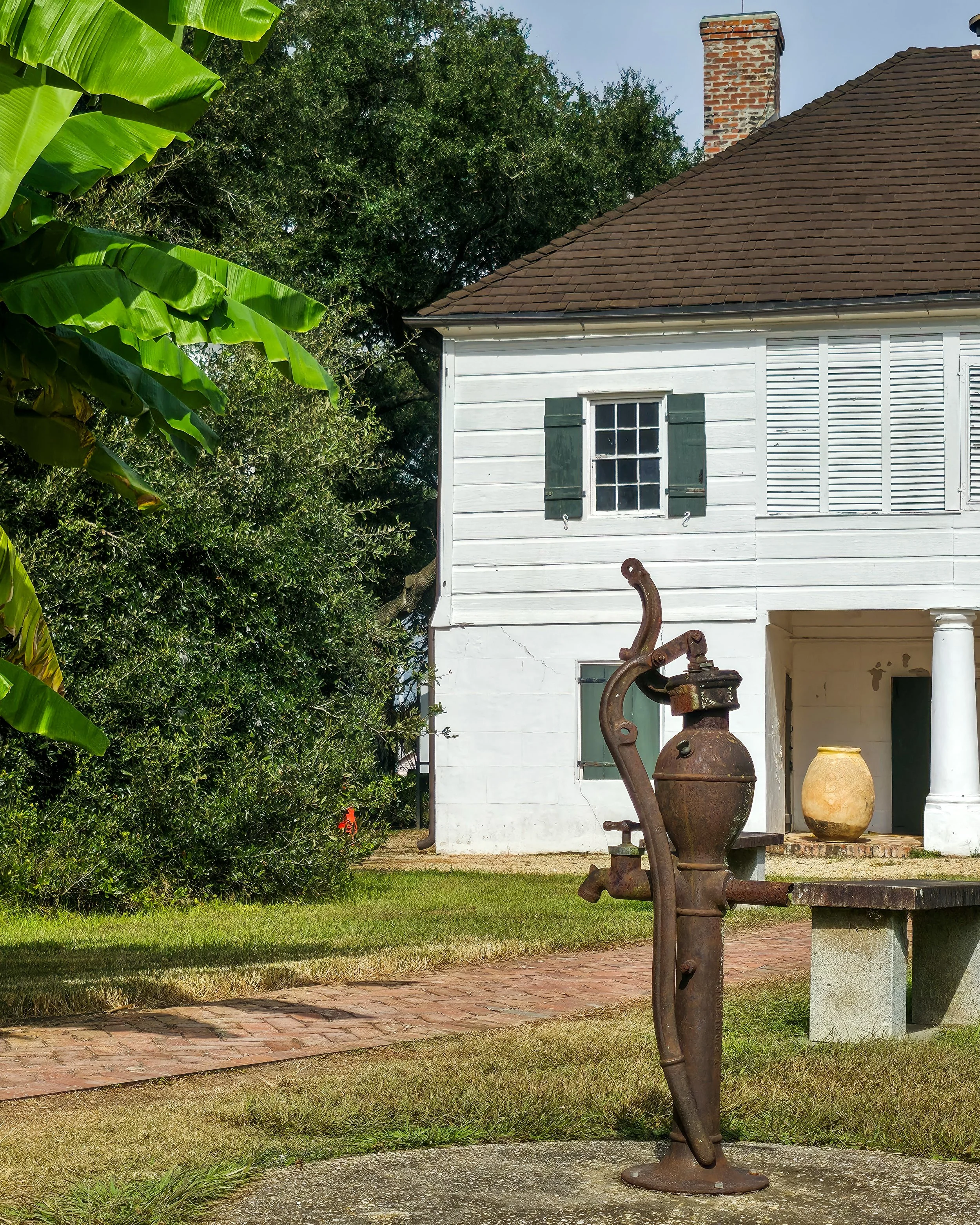
La famiglia Haydel, di origine tedesca, possedette questa terra per 110 anni e ridusse in schiavitù circa 350 persone. La casa padronale fu costruita dagli schiavi nel 1790: mattoni fabbricati sul posto, cipressi abbattuti nelle paludi e segati a mano, pareti isolate con il bousillage, un impasto di fango e muschio spagnolo.
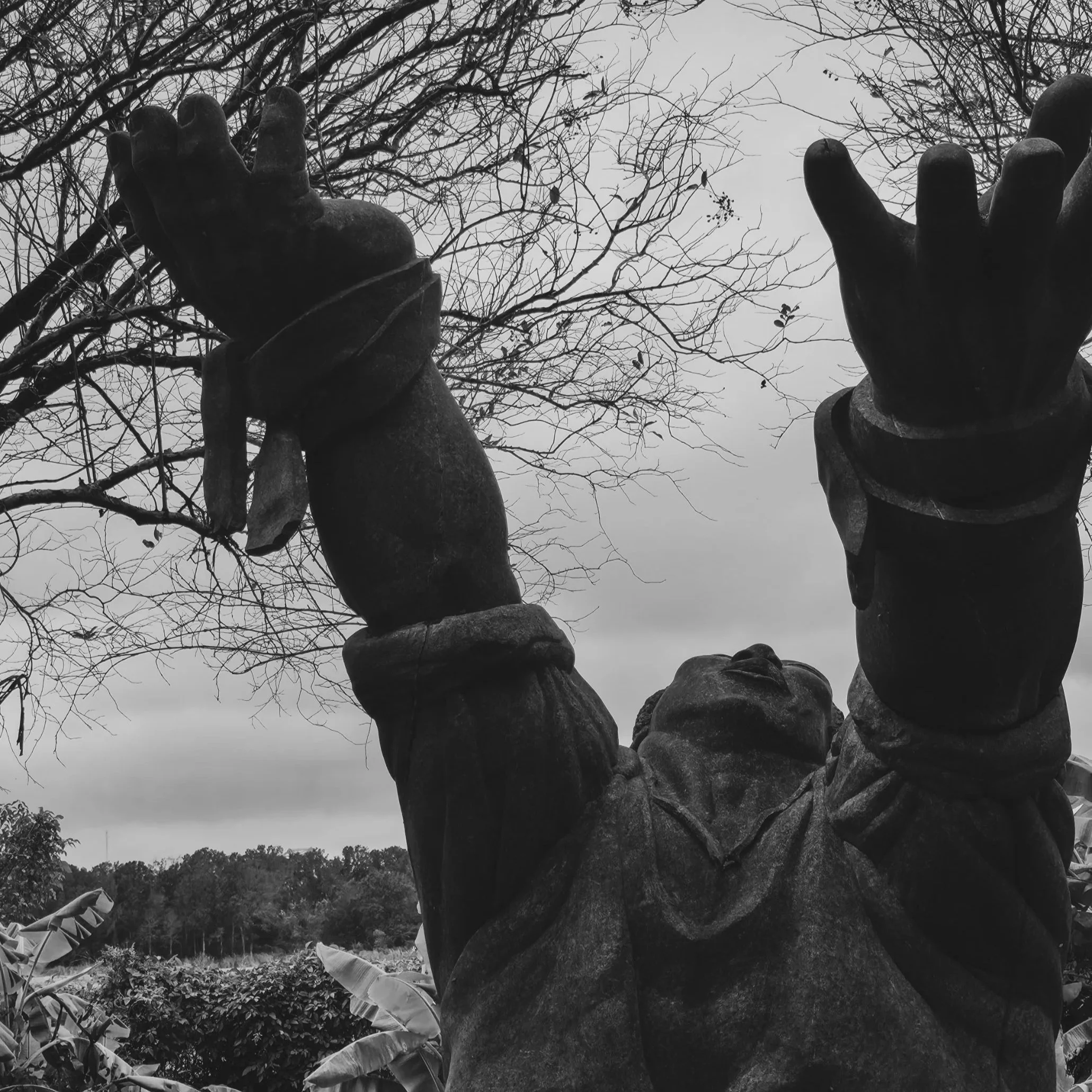
Gli esterni della casa sono fantastici, così come la casa stessa. Immaginatevi una grande casa su due piani, tutta di legno bianco, rettangolare con balconi che la circondano e scalinate per collegare i balconi tra di loro. Sulle travi incisi delle decorazioni e le ringhiere dei balconi, finemente intagliate a mano, eleganti con piccole differenze tra loro, ma con una precisione infinita. Gli esterni sono verdi, la casa è circondata da grossi alberi e un viale contoranto da siepi verde accompagna il viale di ciotoli verso una fontana e delle panchine di ferro battuto dalle quali puoi vedere la strada pubblica di terra battuta. Tutto alla luce del sole. La sensazione che si prova a vedere così tanta bellezza e sapere che è frutto della sofferenza di essere umani, schiavizzati da altri essere umani è agghiacciante. Non puoi non riconoscere il bello architettonico, senza sentirti a disagio nel pensare come sia stato costruito e quanta sofferenza ha attraversato quel viale che porta alla fontana. Camminando verso il la fontana oggi si sentono i canti degli uccellini che abitano la vegetazione circostante, in fondo si intravede una statua rappresentante di un bambino schiavo, messa coscientemente lì tra così tanta bellezza per riportare il visitatore alla realtà cruda e nefasta alle quali, meno di 150 anni fa persone come me e te, hanno vissuto. In un istante puoi immaginarti le urla dei padri e delle madri e i pianti dei bambini.
Da fuori la casa sembra molto più grande di quanto lo sia in realtà. L'audioguida spiega che era voluto: a chi passava, la casa doveva apparire imponente, per mostrare la potenza e la ricchezza della famiglia che la possedeva.
Dentro queste mura si respira un'aria intensa. È davvero forte la sensazione che si prova entrando e cercando di immaginare ciò che succedeva qui poco più di 150 anni fa, ciò che alcuni esseri umani infliggevano ad altri. Si pensava spesso che lavorare in casa fosse un privilegio. L'audioguida racconta un'altra realtà: chi viveva nella casa del cosiddetto padrone, quasi sempre donne, non aveva mai distanza da lui, e spesso queste donne erano esposte alla violenza sessuale. Il ruolo di chi lavorava in casa era però molto importante anche per tutta la piantagione: erano loro a far trapelare le notizie dalla casa verso i campi.
L'inventario del 1860 conserva i nomi delle cinque donne che lavoravano nella casa e nel cortile: Marie, la cuoca, Julianne, Lucy, Françoise e Sally.
la cucina e le ricette creole
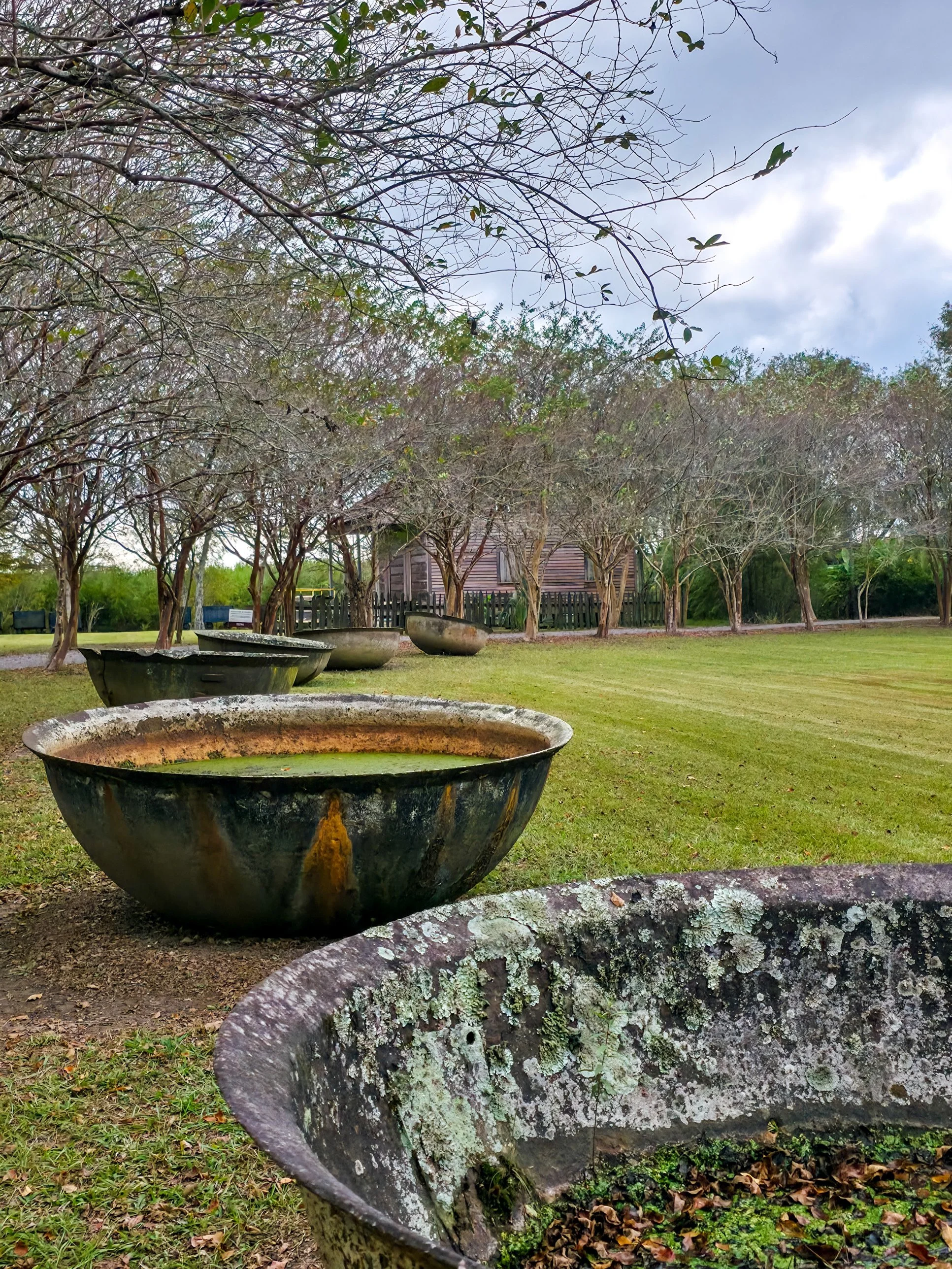
Usciti sul retro della casa, comincia il vero e proprio campo di lavoro. Se la facciata, visibile dalla strada pubblica, era tutta ordinata, pulita e costruita per essere bella agli occhi degli altri, sul retro diventava palese tutta la parte nascosta: lo spazio dedicato al lavoro forzato, le capanne degli schiavi, i grandissimi calderoni per fare lo zucchero e la cucina.
Le cucine erano separate dalla casa, perché odori, calore e fumo restassero lontani dai padroni. Per lo stesso motivo gli schiavi cucinavano il proprio cibo su piccoli fuochi all'aperto, anche perché le abitazioni erano fatte di legno.
Dall'inventario del 1860 sappiamo che la cuoca di questa cucina era Marie, 40 anni, e che la aiutava Julianne, 27 anni e cinque figli.
La cucina era uno spazio vissuto soprattutto dalle persone schiavizzate, dove difficilmente i padroni mettevano piede, sia per gli odori e il fumo, sia perché impegnati in altro. È proprio qui che le persone schiavizzate avevano modo di riconnettersi con le loro origini, i loro ricordi, le loro tradizioni. Secondo il museo, in tantissime ricette c'era sempre un po' d'Africa: gumbo, jambalaya, étouffée di gamberi, couscous.
È spaventosamente affascinante pensare che tante ricette della cucina creola abbiano fortissime influenze africane: in cucina erano proprio le persone schiavizzate a portare creatività, sapere, tecniche e conoscenza delle materie prime, come i fagioli dall'occhio, l'okra, le patate dolci e le angurie, originari dell'Africa e abbondanti in Louisiana.
È importante sottolineare che la cucina creola della Louisiana non ha soltanto origini africane: nasce dall'incontro di culture diverse, africane, francesi, spagnole e native americane. Ma le sue radici africane sono profonde e spesso dimenticate. Lo dice anche il nome del suo piatto più famoso: "gumbo" viene da "gombo", la parola con cui i Bambara dell'Africa occidentale chiamavano l'okra, l'ortaggio che lo addensa. Sia l'okra che i Bambara arrivarono in Louisiana con la tratta degli schiavi. Dietro il gumbo, insomma, c'è il lavoro e la memoria delle persone schiavizzate, che in queste cucine hanno portato ricette e ingredienti del loro continente.
le capanne e il lavoro forzato
Nei 110 anni in cui la famiglia Haydel possedette la piantagione, qui furono ridotte in schiavitù circa 350 persone. Nel 1834 erano 114, tra uomini, donne e bambini. Vivevano in 22 capanne: due vicino alla casa padronale, per chi lavorava in casa, e venti disposte su due file una di fronte all'altra, a circa 800 metri dalla casa, lontane dallo sguardo di chi passava sulla strada.
La piantagione funzionava come una macchina, con una gerarchia precisa. In cima c'era il proprietario, che però non gestiva direttamente i lavoratori. Quel compito spettava al sorvegliante, un uomo bianco libero che viveva nella piantagione e doveva ottenere il massimo della produttività e del profitto. Sotto di lui c'erano i capisquadra, persone schiavizzate anche loro, messe a capo delle altre nei campi: all'alba bussavano alle porte delle capanne con una campanella o un corno, controllavano il rendimento delle altre persone in schiavitù e partecipavano anche alle loro punizioni. Per questo non erano visti di buon occhio dagli altri. C'erano poi gli artigiani, come il fabbro o il bottaio, che con un mestiere richiesto potevano a volte ricevere qualche mancia e, in rarissimi casi, comprarsi la libertà. E c'erano le domestiche, a disposizione dei padroni sette giorni su sette.
Capisquadra, artigiani, domestiche, braccianti: ruoli diversi, ma la stessa condizione. Come riporta l'audioguida: "Tutti gli schiavi erano trattenuti nella piantagione contro la loro volontà, quindi non esisteva un posto migliore o peggiore dove lavorare."
La maggioranza lavorava nei campi, dal buio del mattino al buio della sera: riso, canna da zucchero e, in passato, indaco. Durante la raccolta della canna, da ottobre a dicembre, una squadra di circa settanta persone tagliava, trasportava, macinava e bolliva senza fermarsi, giorno e notte.
Nella piantagione, oggi diventata un museo, ci sono sette capanne: due sono originali, le altre cinque sono state portate qui da Terrebonne Parish, circa 80 km più a sud. Erano essenziali: pareti esterne, qualche divisorio interno e un tetto. L'isolamento era pessimo: tra una trave e l'altra si vede attraverso. D'inverno il freddo era pungente, d'estate il caldo attanagliava chi ci abitava. Si dormiva in più persone nello stesso letto o su pagliericci per terra.
La domenica era formalmente giorno di riposo, come stabiliva il Code Noir, ma la si usava per cucinare, pulire e coltivare piccoli orti con cui integrare le razioni di cibo, altrimenti scarsissime. È il paradosso della condizione di queste persone, schiavizzate nel corpo e nella mente: lavoravano anche nel giorno di riposo per avere più cibo, e quindi più forze, che durante la settimana sarebbero state consumate nel lavoro forzato per il padrone.
Il lavoro nei campi non finì con la schiavitù. In questa piantagione nacque nel 1907 il cantante blues Pleasant Joseph, conosciuto come Cousin Joe, nipote di persone schiavizzate qui. Raccontava di aver lavorato nei campi fin da bambino: sveglia alle tre, pane con il lardo nella scatola di latta, in fila alle sei al freddo. Anche se la schiavitù era stata abolita nel 1865, lo sfruttamento continuò per molti anni con altre dinamiche, che racconto più avanti.
Nelle capanne si vede anche l'evoluzione del loro utilizzo, perché sono state abitate dai braccianti fino alla chiusura della piantagione: nella stanza sul retro, trasformata in cucina, c'è ancora il foro nel muro da cui usciva il tubo della stufa. La piantagione chiuse soltanto nel 1975, poco più di cinquant'anni fa.
gabbie e fame di libertà
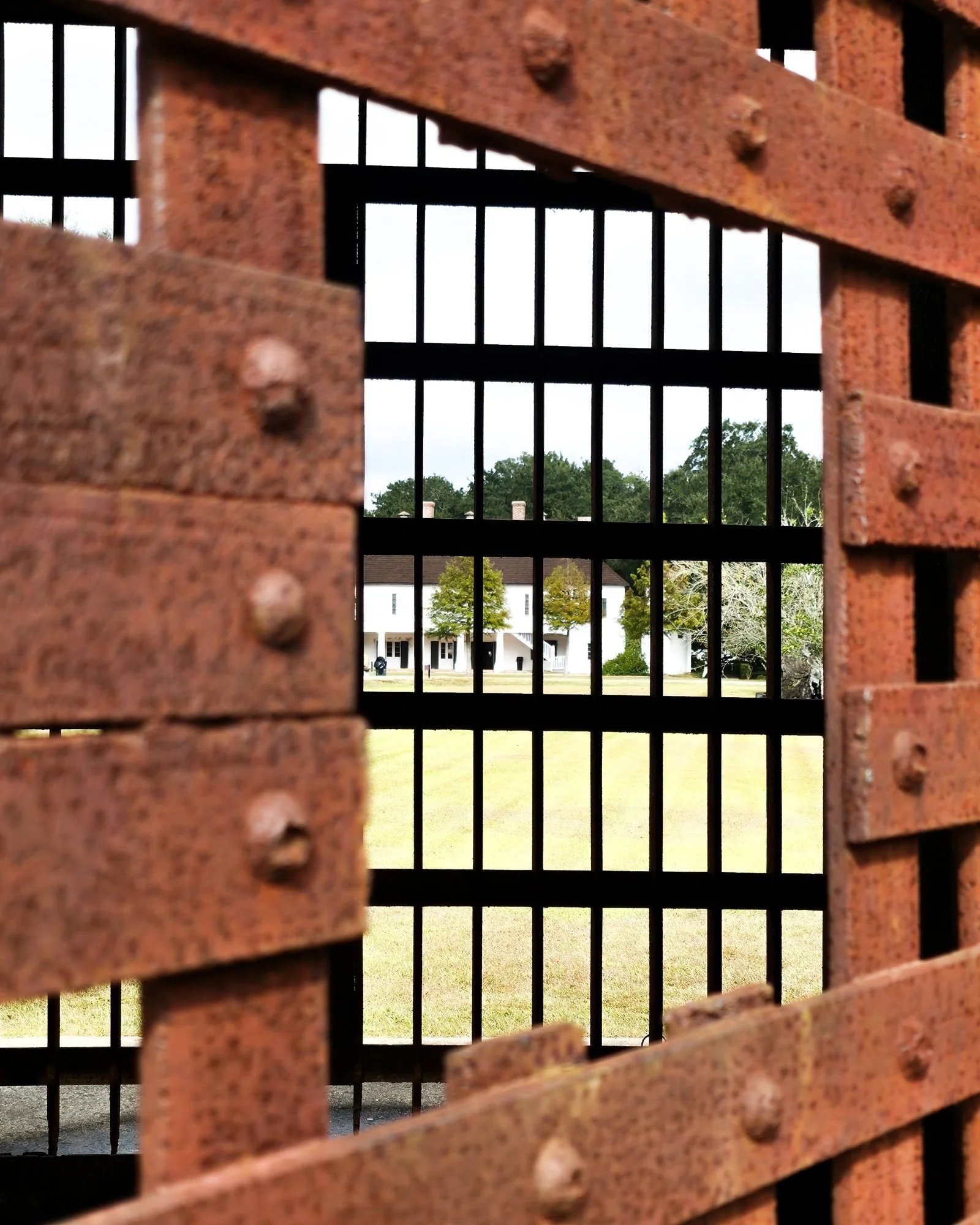
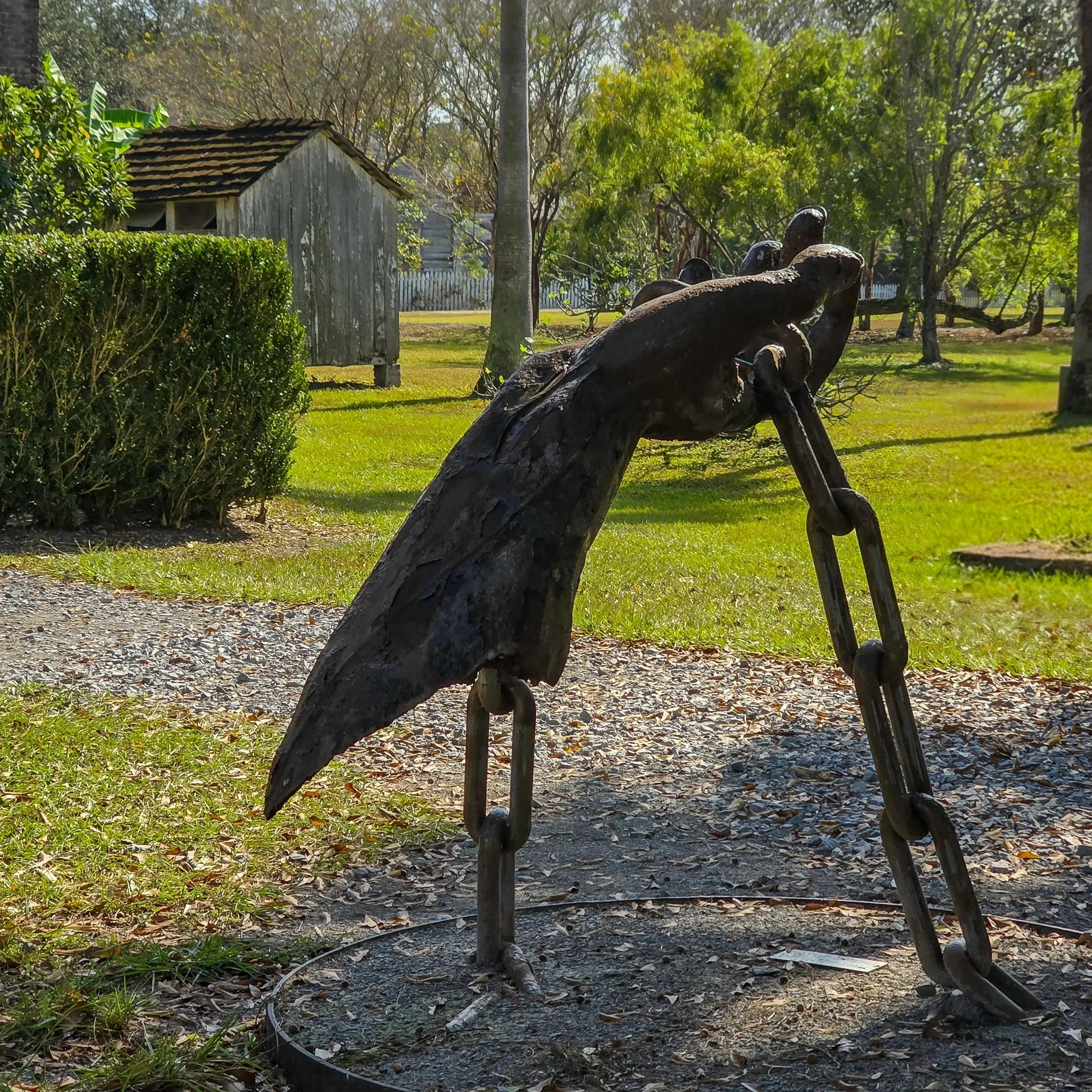
Proseguendo lungo il sentiero si arriva davanti a una cella di ferro arrugginito, con una porta a grata chiodata e una piccola finestra con le sbarre. Fu costruita nel 1868, quindi dopo l'abolizione, e portata qui da Gonzales, in Louisiana.
Non è una vera gabbia d'asta, ma assomiglia a quelle in cui le persone schiavizzate venivano rinchiuse in attesa di essere vendute al miglior offerente.
Ogni persona venduta per essere schiavizzata poteva avere differenti valori e prezzi, siccome purtroppo non erano ritenute persone, ma unicamente merce, strumenti da lavoro. Alle aste, a New Orleans e nelle campagne, ognuno aveva il prezzo appeso al collo, mentre il venditore gridava le sue "qualità" per far salire le offerte. Donne e bambini costavano meno degli uomini; chi aveva un mestiere costava molto di più. Nel 1852 la proprietaria di questa piantagione pagò 1500 dollari per un bottaio, un uomo che fabbricava barili. Chi invece aveva fama di fuggitivo invece valeva meno.
La mortalità era altissima e servivano sempre nuove persone per sopperire i bisogni delle piantagioni. In Lousiana la richiesta era altissima.
Così i mercanti degli stati più a nord mettevano insieme delle carovane, file di persone incatenate, e le portavano verso sud a piedi o in nave. Pagavano vitto, alloggio e cure durante il viaggio, a volte le assicuravano come un carico qualsiasi, e poi le rivendevano a prezzi gonfiati. Un vero e proprio commercio, come fosse un qualsiasi prodotto sul quale poterci fare un rincaro sul prezzo di vendita. È straziante sapere, visitare e rendersi conto che la cattiveria, l’avidità, l’ignoranza e la crudeltà di queste persone che vendevano umani come fossero oggetti è una storia tanto recente nel calendario, e quanto fa male pensare che queste dinamiche dovrebbero essere lontanissime dai nostri valori, ma purtoppo per alcune ragioni, forse non lo sono ancora abbastanza.
La schiavitù si reggeva sulla violenza, e la violenza serviva a controllare. Il Code Noir del 1724 fissava le pene per chi fuggiva: alla prima fuga orecchie tagliate e marchio a fuoco, alla seconda il tendine del ginocchio, alla terza la morte. Le punizioni erano pubbliche, perché tutti vedessero. Laura Smalley, registrata in Texas nel 1941, ricordava un'anziana legata a un pesco e frustata davanti a tutti: "Mi ricordo come se fosse oggi, non posso dimenticare." E si obbediva soprattutto per paura per la vita dei propri cari.
Nonostante questo, fortunatamente, l’istinto umano di salvarsi non è stato annientato completamente e infatti c’è chi scappava. Chi fuggiva veniva chiamato maroon, dallo spagnolo cimarrón, l'animale domestico che torna selvatico. C'era il petit marronage: uscire senza lasciapassare e poi tornare, magari per vedere una persona amata in un'altra piantagione. E c'era il grand marronage: andarsene per non tornare mai più. Senza lasciapassare chiunque era considerato un fuggitivo, e qualsiasi bianco poteva fermarti. Le pattuglie a caccia di taglie, che gli schiavi chiamavano paddy rollers, battevano le strade in cerca di ricompense. La guida riporta che gli annunci di fuga sui giornali dell'Ottocento erano continui: segno che si scappava spesso, e che spesso ci si riusciva.
Il rifugio erano le paludi. Gli europei ne avevano paura, convinti che emettessero gas nocivi, pericolosi per la salute. Per chi fuggiva, invece, qualsiasi pericolo della palude era niente in confronto alla vita nella piantagione. Alcuni ci rimasero per sempre, mescolandosi con le comunità di nativi americani che lì vivevano da secoli.
C’era chi scappava e chi si ribellava. L'8 gennaio 1811 Charles Deslondes guidò lungo la River Road la più grande rivolta di schiavi nella storia degli Stati Uniti: tra 200 e 500 persone, armate di machete, asce e zappe, marciarono di piantagione in piantagione. La rivolta fu repressa in pochi giorni: circa un centinaio di ribelli morirono e le loro teste furono esposte su pali lungo l'argine, perché tutti vedessero.
Lo spaccio alimentare
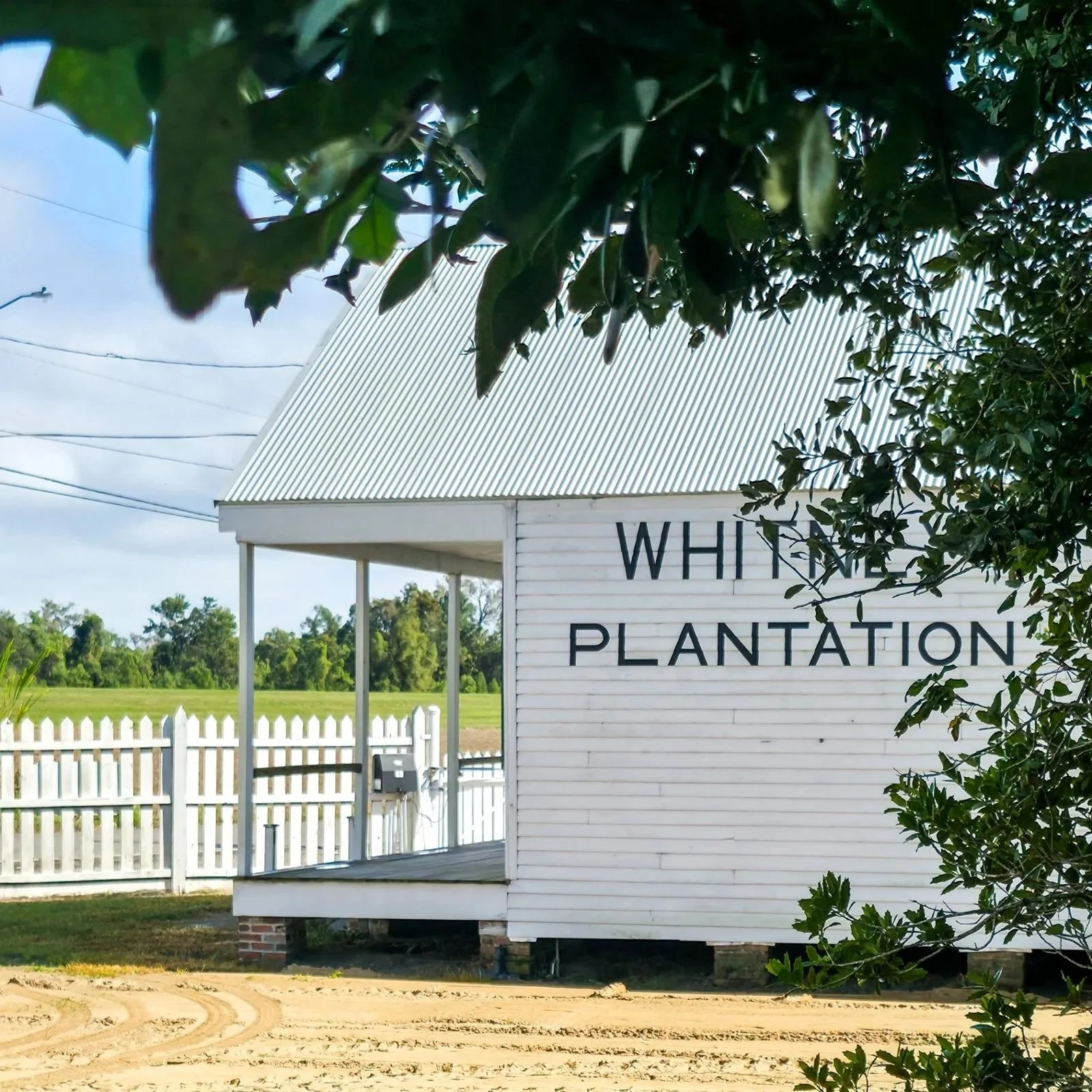
A destra del viale, dopo le siepi, si intravede quello che ai tempi era lo spaccio alimentare della Whitney Plantation. A differenza di quello che si potrebbe pensare, questo spaccio non serviva a vendere all'esterno i prodotti coltivati e lavorati nella piantagione, ma a vendere vestiti, cibo, bevande e medicine ai lavoratori dei campi dopo l'abolizione della schiavitù. Lo spaccio, infatti, fu costruito solo intorno al 1890, circa venticinque anni dopo l'abolizione.
Ed è proprio in questo contesto storico che la mente dis-umana diventa ancora più machiavellica. Molti degli schiavi che con l'abolizione divennero, per legge, persone libere, nella realtà non lo erano. Bisogna considerare che la maggior parte delle persone schiavizzate per anni non aveva una casa, una famiglia da cui andare, un lavoro, un'istruzione: in sostanza, non aveva nessuna prospettiva. Tanti di loro erano addirittura nati nella piantagione, senza nemmeno la possibilità di capire cosa potesse significare essere uomini e donne liberi.
L'audioguida riporta che molti di loro, dopo l'abolizione della schiavitù, divennero lavoratori salariati della piantagione. A prima vista può sembrare quasi un'emancipazione. Purtroppo, però, come ho spiegato nelle righe precedenti, rimanere a lavorare nello stesso luogo che per anni aveva inflitto sofferenza a te e ai tuoi antenati non era una scelta, ma una necessità per sopravvivere.
Qui entra in gioco il pensiero dis-umano e deviato di quelli che erano stati padroni e che dopo il 1865 erano diventati "datori di lavoro". Ed è proprio in queste dinamiche che lo spaccio alimentare diventa uno strumento di schiavitù moderna. Il lavoratore riceveva un salario a fine settimana, ma durante la settimana doveva comprare cibo, bevande, medicine e vestiti. Le piantagioni erano spesso isolate, quindi non era possibile andare a comprare il necessario in un altro negozio: eri costretto a comprarlo allo spaccio, in questo caso quello della Whitney Plantation, a credito. A fine settimana gli acquisti venivano scalati dal salario, e i prezzi erano maggiorati al punto che il salario non bastava a pagare quello che consumavi. Così, nonostante la legge dicesse che eri un essere umano libero, la realtà ti presentava il conto: tante di queste persone si ritrovarono piene di debiti, costrette a lavorare per il padrone come se fossero ancora schiave.
I nomi
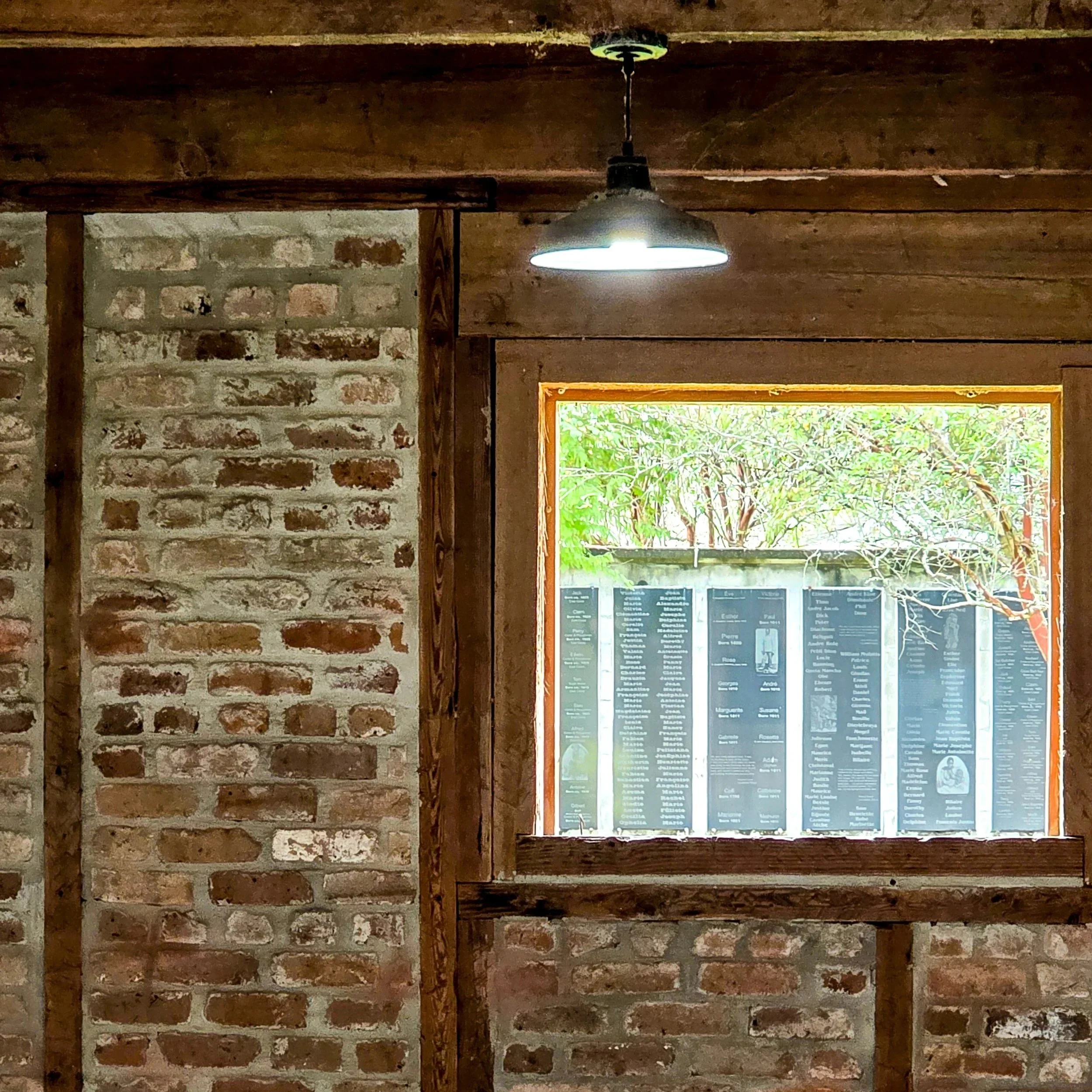
Il cuore della Whitney sono i nomi. Nel Prato degli Angeli sono ricordati i 2200 bambini schiavi morti nella parish di St. John the Baptist tra il 1823 e il 1863, 39 dei quali qui. Su altri muri di granito sono incisi oltre centomila nomi di persone schiavizzate in Louisiana tra il 1719 e il 1820, raccolti dalla storica Gwendolyn Midlo Hall. Lungo il percorso si incontrano le statue di bambini di Woodrow Nash, e i visitatori lasciano ai loro piedi monete, collane e banconote. La cosa più triste nel leggere questi nome è sapere che sono solo alcuni dei nomi delle persone che sono state schiavizzate durante questo periodo, e che la gran parte di loro, non hanno più un nome, un luogo o una memoria da poter onorare.
Verso la fine del percorso c'è la chiesa battista costruita da ex schiavi nel 1870, cinque anni dopo l'abolizione. Secondo il museo, il suo primo nome era Anti-Yoke, "contro il giogo": per chi l'ha costruita era il luogo di tutto ciò che la schiavitù aveva negato, pregare liberamente, istruire i figli, ritrovarsi come comunità. La chiesa per la comunità afroamericana prende conseguentemente un significato storico, di libertà ed emancipazione, a differenza di altre culture nelle quali la chiesta rappresenta una fonte di oppressione.
L'audioguida si chiude così: "Se lascia la piantagione sentendosi colpevole o arrabbiato, significa che ho fallito il mio scopo. La storia nascosta fa male."
Cosa mi porto via
Infatti non è senso di colpa e non è rabbia. A visita appena finita mi viene da piangere. È un senso di impotenza davanti all'ingiustizia del mondo, che ancora oggi si ripete in molti posti del nostro pianeta. Ti senti vuoto, come se tutta la bellezza della natura intorno non bastasse a rendere meno vergognoso e incomprensibile ciò che è stato fatto su queste terre.
È triste pensare che fino al 1975 qui lavoravano dei braccianti. È triste pensare ai braccianti che abbiamo ancora oggi nel Sud Italia e in altre parti del mondo.
È triste pensare che oggi, nonostante la schiavitù intesa come possesso di un altro essere umano sia illegale, ci siano ancora tante situazioni nel mondo in cui una persona è, di fatto, una schiava moderna. E la cosa ancora più triste è che, come chi percorreva la strada davanti alla Whitney Plantation vedeva solo la facciata principale, bella, rigogliosa e pulita, senza preoccuparsi di tutto ciò che accadeva dietro e di tutta la sofferenza che veniva inflitta, anche noi oggi, davanti alle spiagge delle Maldive, ai palazzi maestosi di Dubai, alle morbide magliette di cotone, ai carrelli strapieni dei siti di vendita online, non riusciamo a vedere cosa c'è dietro la facciata, bella, rigogliosa e pulita all'apparenza.
La differenza è che allora si poteva cercare di nascondersi dietro l'ignoranza, la mancanza di informazioni, l'obbedienza a leggi che stavano al di sopra di tutti, e si cercava di giustificare tutto con presunte prove scientifiche o con le leggi divine. Oggi no.
La schiavitù sulla carta è finita qui, ma il dio denaro continua a rendere schiave alcune persone, e sfruttatori altre. Anche nelle nostre società europee la stratificazione sociale pesa di più su chi è già in svantaggio, come le comunità arrivate con i flussi migratori.
È triste anche il turismo di massa che attraversa certi luoghi senza alcuna attenzione per le persone e le culture che li abitano. Come viaggiatore cerco sempre di rispettare il posto in cui vado, la sua cultura e la sua gente: compro nei mercati locali, evito quando posso le grandi catene, cerco di far girare l'economia del posto. Forse è solo un modo per pulirmi la coscienza, ma è anche un modo per aiutare qualcuno attraverso il mio viaggio.
World Unique Journey nasce dalla considerazione che noi come fondatori abbiamo del viaggio stesso, della vita, dell’incontro e della condivisione. Per questo motivo per ogni viaggio che vendiamo, destiniamo il 3% all'associazione Move for Charity, che aiuta bambini in difficoltà in varie parti del mondo.
Non è molto, ma è qualocosa di concreto e questo ci rende estremamente fieri.
English
Lower Your Gaze
Along the River Road, between Baton Rouge and New Orleans, one plantation follows another. Whitney Plantation, in Edgard, is different from all of them: it is a museum devoted entirely to the lives of enslaved people. You don't come here to admire the main house, but to listen to the people who built it. We followed the audio guide, which gives a voice to two of the museum's experts: Senegalese scholar Ibrahima Seck, director of research, and executive director Ashley Rogers.
Today is a grey day, with a few rays of sun breaking through the haze. It's hot and humid. When we enter the plantation, now a museum, we are handed an audio guide: mine in Italian, Sally's in German.
We begin the visit by walking into a huge green space that was once an inescapable prison for so many enslaved people. The feeling is strange and intense. There aren't many visitors, and most of them are white; there are also a few African Americans. Crossing paths on this ground, where not so many years ago white people enslaved Black people, leaves a deep sense of unease, even though you have no direct connection to those atrocities. That is how my visit begins: passing an African American visitor, greeting her, and lowering my gaze.
A house built by others
The Haydel family, of German origin, owned this land for 110 years and enslaved around 350 people. The main house was built by enslaved workers in 1790: bricks made on site, cypress trees felled in the swamps and sawn by hand, walls insulated with bousillage, a mix of mud and Spanish moss.
The grounds are stunning, and so is the house itself. Picture a large two-storey house, all white wood, rectangular, with balconies running around it and staircases connecting them. The beams are carved with decorations, and the balcony railings are finely hand-carved: elegant, each slightly different, yet made with endless precision. Everything around is green: the house is surrounded by large trees, and an avenue lined with green hedges leads along a pebbled path to a fountain and wrought-iron benches, from which you can see the public dirt road. All in broad daylight. Seeing so much beauty while knowing it is the fruit of the suffering of human beings enslaved by other human beings is chilling. You cannot fail to recognise the architectural beauty, yet you cannot help feeling uneasy thinking about how it was built and how much suffering passed along that avenue to the fountain. Walking towards the fountain today, you hear the birds singing in the surrounding trees, and at the end you glimpse a statue of an enslaved child, placed there deliberately, amid so much beauty, to bring visitors back to the raw, grim reality that people like you and me lived through little more than 150 years ago. In an instant you can imagine the screams of fathers and mothers and the crying of children.
From the outside, the house looks much bigger than it really is. The audio guide explains that this was intentional: to anyone passing by, the house had to look imposing, to display the power and wealth of the family that owned it.
Inside these walls the air feels heavy. The feeling is truly strong as you walk in and try to imagine what happened here little more than 150 years ago, what some human beings inflicted on others. People often thought that working in the house was a privilege. The audio guide tells a different story: those who lived in the house of the so-called master, almost always women, never had any distance from him, and these women were often exposed to sexual violence. Yet the role of those who worked in the house was also very important for the whole plantation: they were the ones who let news leak out from the house to the fields.
The 1860 inventory preserves the names of the five women who worked in the house and the yard: Marie, the cook, Julianne, Lucy, Françoise and Sally.
Once you step out behind the house, the real labour camp begins. While the front, visible from the public road, was tidy, clean and built to look beautiful to others, at the back the hidden side became plain to see: the space devoted to forced labour, the cabins of the enslaved, the huge kettles for making sugar, and the kitchen.
Kitchens were separate from the house, so that smells, heat and smoke stayed away from the owners. For the same reason, the enslaved cooked their own food over small open-air fires, also because the houses were made of wood.
From the 1860 inventory we know that the cook in this kitchen was Marie, aged 40, and that she was helped by Julianne, aged 27 and the mother of five children.
The kitchen was a space lived in mostly by the enslaved, where the owners rarely set foot, both because of the smells and the smoke and because they were busy with other things. It was here that enslaved people had the chance to reconnect with their origins, their memories, their traditions. According to the museum, so many recipes always held a little bit of Africa: gumbo, jambalaya, shrimp étouffée, couscous.
It is frighteningly fascinating to think that so many Creole recipes carry such strong African influences: in the kitchen, it was the enslaved who brought creativity, knowledge, techniques and an understanding of ingredients such as black-eyed peas, okra, sweet potatoes and watermelons, native to Africa and abundant in Louisiana.
It is important to stress that Louisiana Creole cuisine does not have only African roots: it was born from the meeting of different cultures, African, French, Spanish and Native American. But its African roots run deep and are often forgotten. The name of its most famous dish says it all: "gumbo" comes from "gombo", the word the Bambara people of West Africa used for okra, the vegetable that thickens it. Both okra and the Bambara reached Louisiana through the slave trade. Behind gumbo, in short, lie the labour and the memory of enslaved people, who brought the recipes and ingredients of their continent into these kitchens.
The cold walls of forced labour
In the 110 years the Haydel family owned the plantation, around 350 people were enslaved here. In 1834 there were 114 of them, men, women and children. They lived in 22 cabins: two near the main house, for those who worked in the house, and twenty set in two facing rows, about 800 metres from the house, out of sight of anyone passing on the road.
The plantation worked like a machine, with a precise hierarchy. At the top was the owner, who did not manage the workers directly. That job fell to the overseer, a free white man who lived on the plantation and had to extract the maximum productivity and profit. Below him were the drivers, enslaved people themselves, placed in charge of the others in the fields: at dawn they knocked on the cabin doors with a bell or a horn, checked the output of the other enslaved people and also took part in their punishments. For this reason, they were not looked on kindly by the others. Then there were the craftsmen, such as the blacksmith or the cooper, who with a sought-after trade could sometimes receive a small tip and, in very rare cases, buy their freedom. And there were the domestic workers, at the owners' disposal seven days a week.
Drivers, craftsmen, domestic workers, field hands: different roles, but the same condition. As the audio guide puts it: "Everyone was held on the plantation against their will, so there was no better or worse place to work."
Most people worked in the fields, from the darkness of morning to the darkness of evening: rice, sugar cane and, in earlier times, indigo. During the cane harvest, from October to December, a team of around seventy people cut, hauled, ground and boiled without stopping, day and night.
On the plantation, now a museum, there are seven cabins: two are original, while the other five were brought here from Terrebonne Parish, about 80 kilometres to the south. They were bare: outer walls, a few inner partitions and a roof. The insulation was terrible: you can see through the gaps between the beams. In winter the cold was biting; in summer the heat gripped those who lived there. Several people slept in the same bed or on straw pallets on the floor.
Sunday was officially a day of rest, as the Code Noir required, but it was used for cooking, cleaning and tending small gardens to supplement the food rations, which were otherwise meagre. That is the paradox of the condition of these people, enslaved in body and mind: they worked even on their day of rest to get more food, and therefore more strength, which during the week would be used up in forced labour for the master.
Work in the fields did not end with slavery. Blues singer Pleasant Joseph, known as Cousin Joe, was born on this plantation in 1907, the grandson of people enslaved here. He recalled working in the fields from childhood: up at three, bread with lard in a tin box, lined up at six in the cold. Although slavery had been abolished in 1865, exploitation went on for many years through other means, which I describe later.
The cabins also show how their use changed over time, because field workers lived in them until the plantation closed: in the back room, turned into a kitchen, you can still see the hole in the wall where the stove pipe came out. The plantation closed only in 1975, just over fifty years ago.
Cages and a hunger for freedom
Further along the path you come to a rusty iron cell, with a studded grated door and a small barred window. It was built in 1868, after abolition, and brought here from Gonzales, Louisiana.
It is not a real auction pen, but it resembles the ones in which enslaved people were locked up while waiting to be sold to the highest bidder.
Each person sold into slavery could have a different value and price, because, sadly, they were not considered people, only goods, tools for work. At auctions, in New Orleans and in the countryside, each had their price hung around their neck, while the seller shouted out their "qualities" to drive up the bids. Women and children cost less than men; those with a trade cost much more. In 1852 the owner of this plantation paid 1,500 dollars for a cooper, a man who made barrels. Those with a reputation for running away, on the other hand, were worth less.
Mortality was extremely high, and new people were always needed to meet the plantations' needs. In Louisiana, demand was enormous. So traders from the states further north put together coffles, lines of people in chains, and took them south on foot or by ship. They paid for food, lodging and care along the way, sometimes insured them like any other cargo, and then resold them at inflated prices. A real trade, as if they were any product on which to add a mark-up. It is heartbreaking to learn, to visit and to realise that the cruelty, greed, ignorance and brutality of these people who sold human beings like objects is such a recent story on the calendar, and it hurts to think that these dynamics should be very far from our values, yet, for some reasons, perhaps they are not far enough.
Slavery rested on violence, and violence was used to control. The Code Noir of 1724 set the punishments for those who ran away: for the first escape, ears cut off and branding; for the second, the hamstring; for the third, death. Punishments were public, so that everyone would see. Laura Smalley, recorded in Texas in 1941, remembered an old woman tied to a peach tree and whipped in front of everyone: "I remember it like it was today, I can't forget." And people obeyed above all out of fear for the lives of their loved ones.
Despite all this, fortunately, the human instinct to save oneself was never completely crushed, and some people ran away. Those who fled were called maroons, from the Spanish cimarrón, a domestic animal that goes wild. There was petit marronage: leaving without a pass and then coming back, perhaps to see a loved one on another plantation. And there was grand marronage: leaving and never coming back. Without a pass, anyone was considered a runaway, and any white person could stop you. The bounty-hunting patrols, which the enslaved called "paddy rollers", roamed the roads looking for rewards. The guide says that runaway notices were constant in nineteenth-century newspapers: a sign that people escaped often, and often succeeded.
The swamps were the refuge. Europeans feared them, convinced they gave off harmful gases, dangerous to health. For those who fled, though, any danger in the swamp was nothing compared with life on the plantation. Some stayed there for good, mixing with the Native American communities who had lived there for centuries.
Some ran away, and some rebelled. On January 8, 1811, Charles Deslondes led the largest slave revolt in United States history along the River Road: between 200 and 500 people, armed with machetes, axes and hoes, marched from plantation to plantation. The revolt was crushed within days: around a hundred rebels died, and their heads were displayed on poles along the levee, so that everyone would see.
The company store
To the right of the avenue, past the hedges, you can glimpse what used to be the Whitney Plantation's company store. Contrary to what you might think, this store was not used to sell the goods grown and processed on the plantation to the outside world, but to sell clothes, food, drinks and medicine to the field workers after slavery was abolished. In fact, the store was built only around 1890, about twenty-five years after abolition.
It is precisely in this historical context that the in-human mind becomes even more Machiavellian. Many of the enslaved who, with abolition, became free people by law were not free in reality. You have to consider that most people who had been enslaved for years had no home, no family to go to, no job, no education: in short, no prospects at all. Many of them had even been born on the plantation, without ever having the chance to understand what it might mean to be free men and women.
The audio guide says that after slavery was abolished, many of them became wage workers on the plantation. At first glance it might almost look like emancipation. Sadly, though, as I explained above, staying on to work in the very place that for years had inflicted suffering on you and your ancestors was not a choice, but a necessity for survival.
This is where the in-human, twisted thinking of those who had been masters, and after 1865 had become "employers", comes into play. And it is precisely within these dynamics that the company store becomes a tool of modern slavery. Workers received their wages at the end of the week, but during the week they had to buy food, drinks, medicine and clothes. Plantations were often isolated, so it was impossible to buy what you needed in another shop: you were forced to buy it at the store, in this case the Whitney Plantation's, on credit. At the end of the week the purchases were deducted from your wages, and prices were marked up so much that your wages weren't enough to pay for what you consumed. So, even though the law said you were a free human being, reality presented you with the bill: many of these people found themselves deep in debt, forced to work for the master as if they were still enslaved.
The names
The heart of Whitney is its names. The Field of Angels remembers the 2,200 enslaved children who died in St. John the Baptist Parish between 1823 and 1863, 39 of them here. Other granite walls bear more than one hundred thousand names of people enslaved in Louisiana between 1719 and 1820, gathered by historian Gwendolyn Midlo Hall. Along the path you meet Woodrow Nash's statues of children, and visitors leave coins, necklaces and banknotes at their feet. The saddest thing about reading these names is knowing that they are only some of the people enslaved during this period, and that most of them no longer have a name, a place or a memory to honour.
Near the end of the path stands the Baptist church built by formerly enslaved people in 1870, five years after abolition. According to the museum, its first name was Anti-Yoke, "against the yoke": for those who built it, it was the place for everything slavery had denied them: praying freely, educating their children, coming together as a community. For the African American community, the church therefore takes on a historical meaning of freedom and emancipation, unlike in other cultures where the church represents a source of oppression.
The audio guide ends with these words: "If you leave the plantation feeling guilty or angry, then I have failed. Hidden history hurts."
What I take with me
And it isn't guilt, and it isn't anger. With the visit just over, I feel like crying. It's a sense of powerlessness in the face of the world's injustice, which still repeats itself in many places on our planet. You feel empty, as if all the beauty of the nature around you weren't enough to make what was done on this land any less shameful or incomprehensible.
It's sad to think that farmworkers were still working here until 1975. It's sad to think of the farmworkers we still have today in southern Italy and in other parts of the world.
It's sad to think that today, even though slavery in the sense of owning another human being is illegal, there are still so many situations in the world where a person is, in effect, a modern slave. And what is even sadder is that, just as people travelling along the road in front of Whitney Plantation saw only the main facade, beautiful, lush and clean, without caring about everything that happened behind it and all the suffering inflicted there, we too, today, in front of the beaches of the Maldives, the majestic towers of Dubai, soft cotton T-shirts, overflowing online shopping carts, fail to see what lies behind the facade, beautiful, lush and clean on the surface.
The difference is that back then people could try to hide behind ignorance, lack of information, obedience to laws that stood above everyone, and they tried to justify it all with so-called scientific evidence or divine law. Not today.
On paper, slavery ended here, but the god of money keeps making some people slaves, and others exploiters. In our European societies too, social stratification weighs most heavily on those already at a disadvantage, such as the communities that arrived through migration.
Mass tourism is sad too, when it passes through places with no care for the people and cultures who live there. As a traveller, I always try to respect the place I visit, its culture and its people: I buy at local markets, avoid big chains whenever I can, and try to keep money in the local economy. Maybe it's just a way to clear my conscience, but it's also a way to help someone through my journey.
World Unique Journey was born from the way we, as founders, see travel itself, life, encounters and sharing. That is why, for every trip we sell, we give 3% to Move for Charity, an association that helps children in need in different parts of the world.
It isn't much, but it is something concrete, and it makes us extremely proud.
